


Overview Of the Annapurna Base Camp shortest Trek - 6 Days
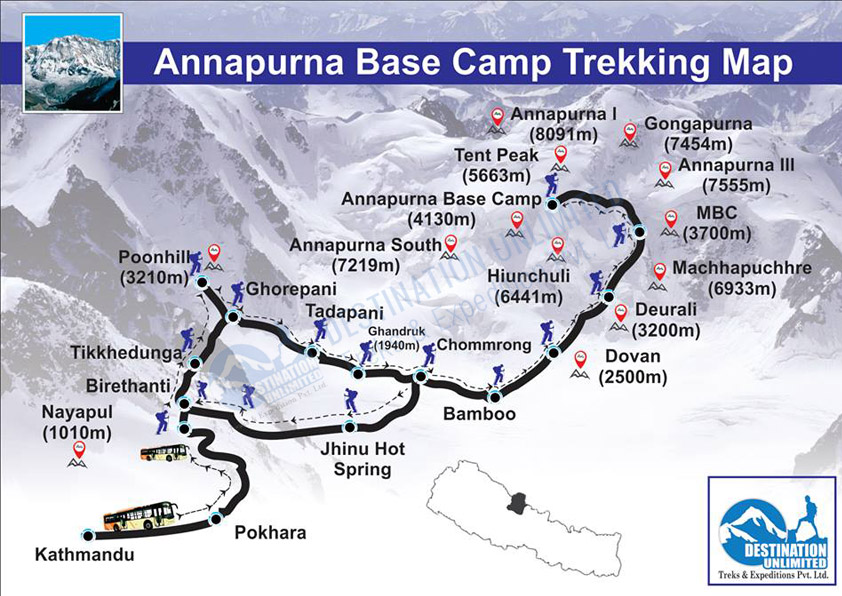
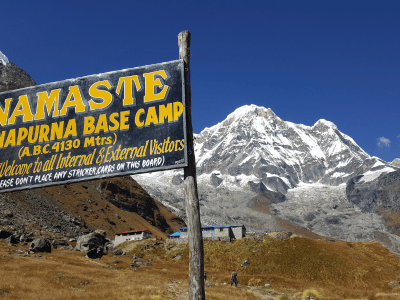
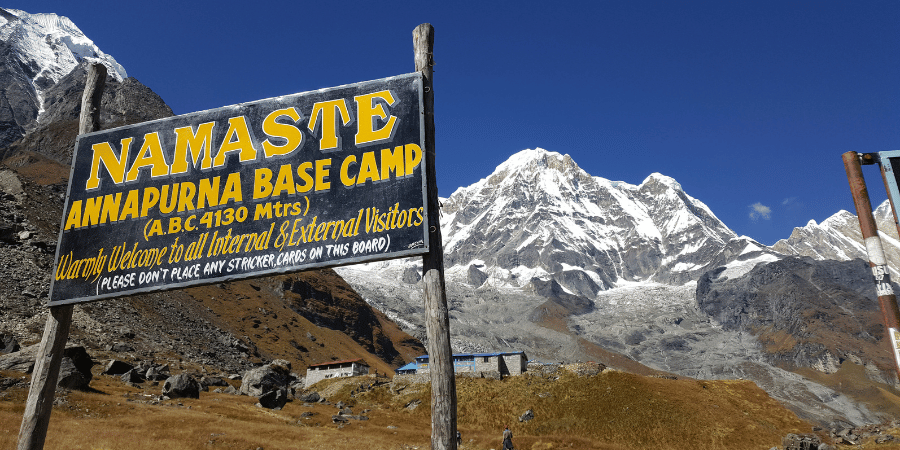
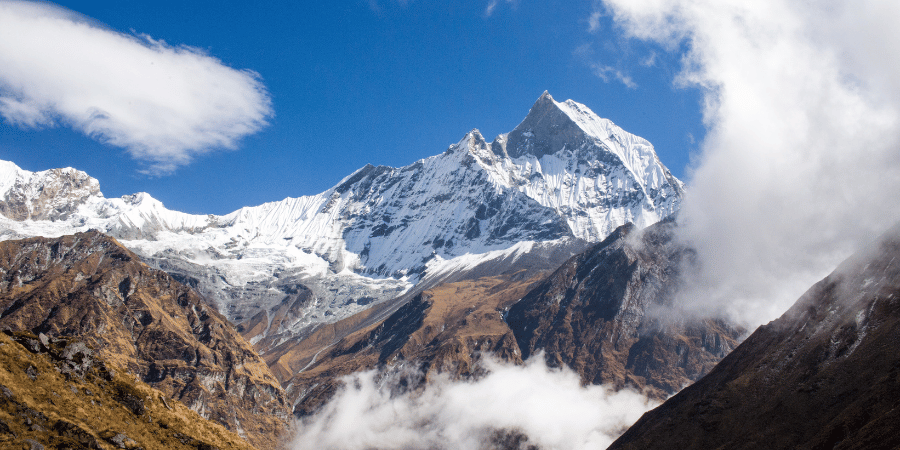
Are you looking for the shortest Annapurna Base Camp trek? We offer you a 6-day, adventurous, scenic, and culturally rich trek. This trek starts from Pokhara and goes through Siwai, Chhomrong, Dovan, and Deurali to reach Annapurna Base Camp. This is a moderately difficult trek. You can trek during the spring (March, April, May) and autumn (October, November, December) seasons. During this trek, you will reach 4130 meters. As you approach the Annapurna Base Camp (ABC) at 4,130 meters, you can easily see mountains like Annapurna I (8,091 meters), Annapurna South, Hiunchuli, Gangapurna, and Machhapuchhre.
This trek is perfect for anyone who wants to travel to the Annapurna region in a short time. During the journey, you will travel through the Himalayan villages, riverbanks, forests, streams, grasslands, high mountains, and high hills. The journey is very different in terms of terrain. The journey is planned with the change of different natural environments in a single day. The main objective of this journey is to see the mountains, enjoy nature, travel through the forest, understand the Himalayan culture, and spend a few days in the mountains. The main trek starts from Siwai, which is some distance from Pokhara. The journey begins through stone steps, farmland paths, and forests. The journey that begins in this way passes through different places and settlements and reaches the base camp of Annapurna on the fourth day.
The experience of traveling through the forest may be new to you. The journey progresses through dense forests of rhododendron, firfire (maple), banj (oak), unyu (fern), etc. In the spring, rhododendrons bloom throughout the forest. You can easily enjoy such a colorful forest. After climbing a few hills, you may feel like taking out your camera and taking pictures. A journey through the forest is different in many ways. Since this is a mountainous region, many birds are found here. The sounds of these birds make the forest musical. Not all birds are always visible, but sometimes you can see birds like the Himalayan Monal, Black Pheasant, Snow Pigeon, Spotted Dove, Himalayan Griffon Vulture, and Steppe Eagle. Long ago, many animals could be seen, but now, due to the increase in human population, not all animals can be seen along the road. Only at certain times, you may see the Himalayan Tahr, Himalayan Goral, Langur monkey, Rhesus macaque, Yellow-necked Marten, and Barking Deer. While traveling through the forest, you feel that the cold increases and decreases at the same time. To be honest, the journey is very enjoyable.
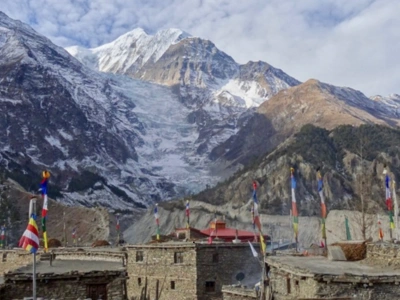
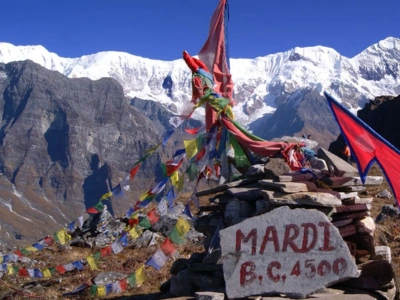
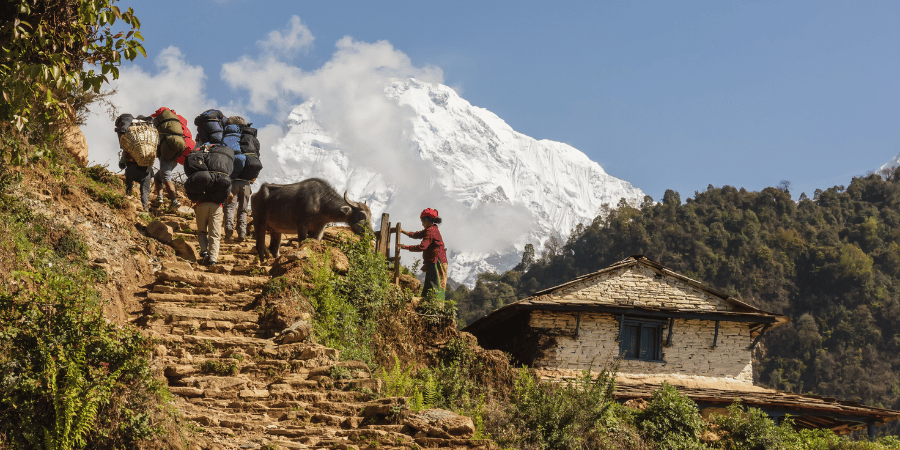
This trip gives you important information about the Himalayan lifestyle of Nepal. In and around the teahouse, you can meet Gurung, Magar and Tibetan people. They are different in terms of culture and tradition. The houses are made of stone, wood, thathed and tin roofs. The teahouses are colorful. The floor of the courtyard is also made of stone. In the settlements, food is usually cooked on firewood, but LPG gas is also used in the teahouses. In the Buddhist villages, prayer flags, chortens, and mani wheels, etc. can be seen. The people of the village speak their own language to some extent and Nepali to a large extent. The teahouse owners also speak English. You can easily get Nepali dishes like dal, rice and vegetables. This is also the main food of Nepal. You can also eat some special foods like Dhido (millet porridge), local chicken meat, Gundruk (fermented green leaf), sinki, puri roti (local bread), Raksi (local liquor), etc. There is a room and some beds for sleeping. Although these may seem to have fewer facilities, they are pleasant and warm. The tea houses are very crowded during the season. This trip is especially for seeing the Himalayas, but to immerse yourself in the culture, you should spend some time in the village. Overall, this trip provides special pleasure to those who are interested in Himalayan culture, lifestyle, food, etc.
Would you like to go to Annapurna Base Camp with us at short notice? Please get in touch with us and our expert team.
Annapurna Base Camp Short Trek—6 Days—Highlights
- The fastest route to Annapurna Sanctuary
This is a 6-day trek. It is probably the shortest trek. This trek is for those who have less time. In this short time, you can observe the natural scenery, mountains, hills, forests, ancient Himalayan settlements, etc. - Panoramic views from Annapurna Base Camp (4,130 meters)
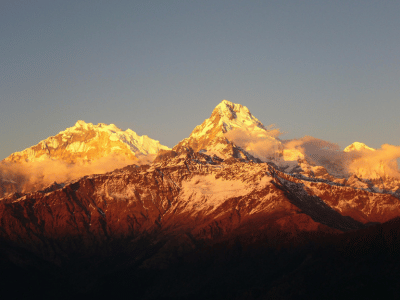
This is a once-in-a-lifetime experience. When you reach Annapurna Base Camp, you get a new Himalayan experience. You can see in all directions in 360 degrees. You can easily see Annapurna I (8,091 meters), Annapurna South (7,219 meters), Machhapuchhre (6,993 meters), Hiunchuli (6,441 meters), Gangapurna (7,454 meters), and Tent Peak. When the sun's rays hit the mountains at sunrise or sunset, this view cannot be described in words. You can preserve these precious moments forever through photos and videos. - Cross diverse landscapes in a short time
To be honest, this diversity is very different. Sometimes the path moves through farmland; sometimes it moves along rivers and waterfalls. Sometimes the journey goes through dense forests of rhododendron, oak, bamboo, and reeds, and sometimes it goes through snow-covered grasslands. You will cross many small streams and wooden bridges and suspension bridges. The paths also move along stone steps to some extent. Sometimes there are mountains with extremely cold winds, and sometimes there are open fields with snow. In such a short time, you can experience everything. - Experience Gurung and Magar culture
You will reach the Gurung and Magar villages of Chomrong and Sinuwa. You will receive warm hospitality. The houses of the settlement are made of stone, mud, and wood in a mythological style. In the Buddhist village, you will see prayer flags, mani wheels, stupas, etc. You will also get to study the Himalayan agriculture. You will stay in a teahouse and eat Himalayan cuisine. To be honest, you will have a deep feeling of authentic Himalayan life. - Rich flora and fauna of the Annapurna Conservation Area
Our entire journey and route fall within the Annapurna Conservation Area. This area has a variety of plants and wildlife. In the spring, you will see the rhododendron forests blooming in red, pink and white. You can also see the Himalayan monal (dangfe), langur monkeys, musk deer and various types of small birds. The higher areas are full of alpine shrubs and seasonal wildflowers. - Machhapuchhre Base Camp Stop
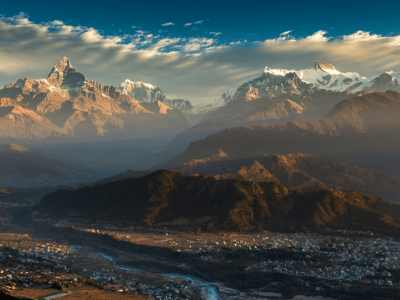
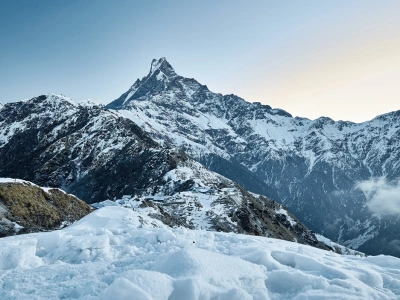
We reach ABC via Machhapuchhre Base Camp. From Machhapuchhre Base Camp, you can see the sacred fishtail peak of the Himalayas. This may be a new experience for you. It has been like a village since 1970. A small village. There are a few tea houses here, and it is a pleasure to stay. We will go to Annapurna Base Camp via this base camp. - Comfortable Tea House Accommodation
Even on this short trek, you will find comfortable teahouses that offer hot food, warm beds and a friendly atmosphere. After a day of trekking, eating food on a wood stove and enjoying dal rice, momos or local soup becomes one of the unforgettable parts of the journey.
Route Overview of the Annapurna Base Camp shortest Trek - 6 Days
Our journey to Annapurna Base Camp starts from the beautiful city of Pokhara. We travel west along the banks of the Seti River by road. We pass through some villages and reach Siwai via Nayapul Jhinu Mountain. The road is not that easy. During the rainy season, it is very difficult to travel even in a jeep. Siwai is the starting point of our trek, from where we will travel to Annapurna. Are you ready to trek? You can see many trekkers in Siwai; some are drinking tea, and some are chatting about the trek. Now you are becoming an Annapurna trekker. Tighten your shoelaces, tie the rope of your bag, take a stick if you want to take a stick, and get ready for the trek.
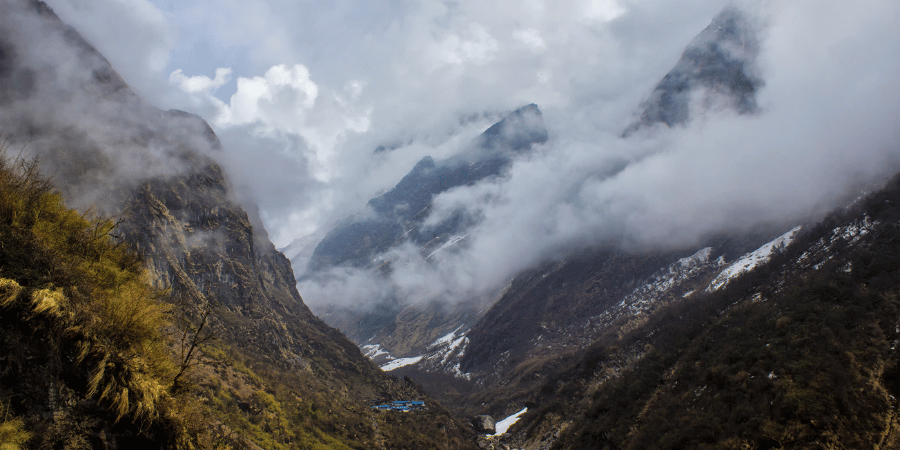
The first step of the trek is going uphill. The path enters the forest through some stone steps, through a farm. After crossing the suspension bridge of the Modi River, you will go uphill and reach Chomrong (2170 meters). From Chomrong, you will see Annapurna South and the majestic Machapuchhre. From Chomrong, the journey to Dovan starts with a slight descent. There are steps made of stones. After some time, we cross the Chomrong River from the suspension bridge. After crossing the river, the journey goes uphill through the bamboo and reed forests. To be honest, it is a bit quiet. Only a few villages can be seen. This journey is very full of natural scenery. After some time, you will reach Sinuwa. Sinuwa is a village. There are some teahouses here. We will rest here for some time. Today we will reach Dovan. We will also stay in Dovan. From Sinuwa, the path enters a dense rhododendron and bamboo forest, where you can see Himalayan langur monkeys, colorful birds and seasonal wildflowers. The higher we climb, the cooler the air becomes. We walk along the banks of the Modi River for some time and then reach Dovan.
Dovan is a small settlement. It is located on a slightly sloping hill. You can hear the sound of the river here. There are only a few teahouses here. That is why it feels very peaceful. You can spend a night in a teahouse. You can taste Nepali Himalayan food. Those who live in cities like New York and Tokyo may feel very different here. Perhaps you wish you could have stayed longer. Our one-way journey is still ahead. We travel from Dovan to Deurali. Now we climb up through a narrow valley. Our journey continues through bamboo forests. You can see a deep river flowing below the path and steep mountains above. As we climb higher, the vegetation becomes less visible. As you approach Deurali, the valley widens and you start seeing snow-capped peaks. After some time, you reach Deurali. This is a place located on a snow-capped mountain. It gets very cold here in the evening. Winters are difficult to live in. Perhaps it is because it is located in a mountainous area at an altitude of 3270 meters.
Perhaps when you start from Deurali towards Annapurna Base Camp, you feel that it is the most exciting and fruitful day of the trek. From Deurali, the entire journey opens up. Everything starts to be visible. There is a slight risk of avalanches on the path from Deurali to Machhapuchhre Base Camp (MBC). Here, you have to walk slowly and carefully. Machhapuchhre Base Camp (MBC) is located at 3700 meters. From here, the Machhapuchhre Himal (Fish Tail) is visible right in front of the eyes. From MBC, the path gradually climbs into the heart of the Annapurna Sanctuary, which is a high glacial basin surrounded by high peaks. When you reach ABC, you can see the views in all directions. You will see mountains like Annapurna I (8,091 meters), Annapurna South, Hiunchuli, Gangapurna and Machhapuchhre very close.
Reaching ABC is a once-in-a-lifetime moment. The base camp is located on a wide, flat grassland, which is often covered with snow during the cold months. At sunset, you will see the mountains in golden and pink colors. Perhaps no one can forget such a moment. You can enjoy the mountains here and play hide and seek. Don't forget to take some photos and videos. We will spend one night here. This will be a night spent at a height of 4130 meters. Here you can eat Himalayan food. For you, it may be a story of a night spent in the mountains.
Perhaps it is time for us to return. From there, we will return to Sinuwa.
The trek retraces the path through Machhapuchhre base camp, Deurali and Dovan. Our entire journey is downhill. The descent is a bit faster. We return to Sinuwa through the same forest, greenery, river, and creek. Today we stay in Sinuwa. Perhaps today is the last day of our journey. We return to Siwai by hiking. From Siwai, we return to Pokhara by road.
Annapurna Base Camp shortest Trek Cost —What to Expect
If you’re short on time but still want to stand face-to-face with the Annapurna giants, this 6-day ABC trek is your shortcut to the heart of the Himalayas. It skips the long detours and heads straight into the action—lush forests, deep gorges, and glacier valleys all the way to Annapurna Base Camp (4,130m).
You’ll start the trek after a drive from Pokhara and gradually move through warm lowlands into cooler alpine landscapes. Expect stone steps (lots of them), waterfalls, and traditional villages along the way. The altitude gain is fast, so you’ll feel the adventure kick in early.
The final climb to ABC is unforgettable. Sunrise hits the snow peaks of Annapurna I, Machhapuchhre (Fishtail), and Hiunchuli, and it’s just... wow. You’ll sleep close to the mountains one night, then make your way back down through the same scenic trail.
This short ABC trek is great for fit hikers who want the classic base camp experience without the long commitment. The trails are well-marked, the tea houses are cozy, and the views? Absolutely worth it.
Annapurna Base Camp shortest Trek - 6 Days —Full Breakdown
Planning to do the Annapurna Base Camp (ABC) trek in just 6 days? It’s a great way to enjoy the Himalayas without spending too much time or money. This shorter version of the trek is perfect if you want amazing mountain views, local culture, and a real trekking experience—all in under a week. You’ll walk through forests, cross rivers, stay in simple teahouses, and finally reach the base of Annapurna, surrounded by huge snow-covered peaks. The best part? You don’t need to be an expert trekker or have expensive gear—just a good plan and a basic budget are enough to make it happen.
Total Estimated Cost for 6 Days:
Difficulty and Physical Fitness Required
This 6-day trek isn’t super hard, but it’s not easy either. You don’t need to be super fit or an athlete, but you should be ready to walk a lot—up and down hills, with lots of steps. Around Chomrong, it feels like the steps never end!
The highest point is Annapurna Base Camp (4,130m), so the air gets a bit thin. You might get tired faster than usual, even doing small things like walking or tying your shoes. But if you walk slowly and take breaks, you’ll be okay.
You don’t need special training. If you’ve done some hikes or just walk often, that really helps. It’s perfect for people who are in normal shape and want to see the mountains without doing a super long trek.
With comfy shoes, some energy, and a little patience, you’ll enjoy the trek and the views will make it all worth it.
Annapurna Base Camp shortest Trek - 6 Days vs. Other Short Treks in Annapurna
If you’ve got just a week and want to see the big mountains up close, the 6-day Annapurna Base Camp trek is a great pick. In less than a week, you reach the base of Annapurna I, surrounded by snow peaks. The trail takes you through beautiful forests and small villages—it’s fast, exciting, and full of views you’ll never forget.
Now, if you’re looking for something easier, the Ghorepani Poon Hill trek is a better option. It’s shorter and less steep. You still get amazing mountain views, especially at sunrise from Poon Hill, but you don’t reach a base camp.
Want a quieter trail? Try the Mardi Himal trek. It’s peaceful with fewer trekkers and gives you awesome views of Machhapuchhre (Fishtail). The paths feel more remote, though the teahouses are simpler, and you don’t go as high as ABC.
In short:
- ABC Trek is perfect if you want big views and adventure packed into 6 days.
- Poon Hill is great if you want it easy and scenic.
- Mardi Himal is for those who like quieter paths and hidden views.
What is the best season to trek the Annapurna Base Camp shortest Trek - 6 Days ?
Alright, let’s talk about the best time to do this trek. I’ve been on the trail myself, and honestly—when you go really makes a difference. It’s not just about getting good views (though those are amazing); it’s also about how the weather feels, how crowded the path is, and how much you’ll actually enjoy the walk. Go at the wrong time, and even the best trek can feel a bit rough. But pick the right season? It turns into something unforgettable.
So before you start packing your bag, here’s a real breakdown of what each season actually feels like when you’re out there hiking in the Annapurna region.
- Spring (March to May)
This is when everything feels alive. The forests are full of blooming flowers, especially those bright rhododendrons. The air is fresh—not too hot, not too cold. It’s a great time if you want amazing mountain views with a pop of color all around you. - Autumn (September to November)
This is the favorite for a reason. After the monsoon, the skies are clear, the mountains look super sharp, and the weather is just right for trekking. Photos turn out great. Only downside? You won’t be the only one out there—it’s a busy season. - Winter (December to February)
Yes, it’s cold. Mornings can be freezing. But the trails are quiet, and the snow on the mountains makes the views look unreal. If you're okay with wearing a few extra layers, winter has its own kind of beauty. - Monsoon (June to August)
To be honest, this isn’t the time to go. The rain doesn’t stop, trails get muddy and slippery, and clouds cover the mountains most days. It’s messy and risky—not worth it unless you really love trekking in the rain.
Trip Essentials And Trip Information
Before heading out on the Annapurna Base Camp short Trek, or really any trek in Nepal, it’s a good idea to get a few key things sorted ahead of time. It’s not complicated, but having the basics in place will save you stress once you’re in the mountains. From visas and money to travel insurance, here’s what you should know before you lace up your boots and hit the trail.
- Visa for Nepal
If you're not from India, you’ll need a tourist visa. It’s easy to get on arrival at Kathmandu airport. A 15-day visa costs about $30, and your passport should be valid for at least 6 months. - Money & Exchange
Nepal uses the Nepali Rupee (NPR). You'll need cash for tea houses, snacks, and extras like hot showers or Wi-Fi. Exchange your money or withdraw cash in Kathmandu or Pokhara—ATMs are rare on the trail. - Travel Insurance
Get travel insurance that covers high-altitude trekking and emergency rescue. It’s not expensive and gives peace of mind in case something unexpected happens in the mountains.
How To Book This Trek?
Thinking about the Annapurna Base Camp Short Trek—6 Days with us? Great choice! Booking is super simple—no stress, no fuss. Here’s how it works:
Reach Out & Chat
Got questions? Just message us through our website, email, or chat. Our team is always happy to help—no question is too small!
Secure Booking, Safe Payment
We’ve kept it easy and secure:
- Pay with Visa/Mastercard (quick and hassle-free).
- Prefer bank transfer? No problem—we’ll send you all the details.
Small Deposit, Big Adventure
To lock in your spot, we just need a 20% deposit. The rest? You can pay when you arrive in Nepal—card or cash, whatever works for you.
- Once your deposit’s in, we’ll email you everything:
- Your itinerary (day-by-day plan)
- Accommodation details (cozy tea houses!)
- Trekking permits (we handle the paperwork)
- Transport info (getting you where you need to go)
Why Book Early?
- Best guides (local experts who know every trail twist).
- No last-minute stress (especially in busy seasons like spring & autumn).
Still Deciding? No Rush!
We’re here to help—before, during, and after your trek. From your first "Hello!" to your final high-five goodbye, we’ve got your back.
Ready to start your adventure? Let’s do this!
Related & Alternate Treks Near Annapurna Base Camp
Other alternate treks take you through different routes and span different days. Nowadays, Annapurna Region treks are going to be shorter. Here we have a short list of the best related and alternate treks.
Khorpa Danda Trek Annapurna Dhaulagiri Community Trek
The Annapurna Dhaulagiri Community Trek is a 15-day off-the-beaten-path adventure that takes you to Khopra Danda (3,660 m) and the sacred Khayar Lake (4,660 m). Walk through rhododendron forests, traditional Gurung and Magar villages, and enjoy panoramic views of Annapurna, Dhaulagiri, and Nilgiri while staying in community-run lodges with authentic Nepali hospitality.
Annapurna Base Camp Trek - 15 Days
The Annapurna Base Camp Trek is a classic 15-day adventure in Nepal, reaching the heart of the Annapurna Sanctuary (4,130 m). This trek offers panoramic Himalayan views, cultural encounters with Gurung and Magar villages, rhododendron forests, and unforgettable sunrises over Annapurna and Dhaulagiri. A perfect blend of nature, culture, and adventure.