


Royal Trek Nepal—A Scenic 9-Day Himalayan Journey through Pokhara, Syaklung & Chisapani
Are you planning a short and scenic trek in Nepal? The 9-day Royal Trek is a great Himalayan adventure trek starting from Pokhara and passing through Kalikasthan, Syakklung, and Chisapani. This route was first trekked by Prince Charles of England and his team in 1980; hence, it is known as the Royal Trek today. You can enjoy this trek in spring (March-May) or autumn (September-November). The Royal Trek is one of the easiest treks in the Annapurna region. Destination Unlimited Treks provides this trek with comfortable transport, quality accommodation, delicious Himalayan food, and an experienced trekking guide—all at an affordable price.
This trek runs for 9 consecutive days. The trip starts with a visit to the Kathmandu Durbar Square and Swayambhunath in Kathmandu. The main trekking begins after moving from Pokhara to Kalikasthan.
During this Royal Trek Nepal, you will cross the Vijayapur River, passing through rural areas. All these journeys go through green hills and fields of arable land. Sometimes the journey reaches the banks of the Seti River and sometimes the dense forests of Sal Sisau. Some of the passes are very easy, flat and easy to walk, while others are steep. In a short time, we visit different places with natural diversity.
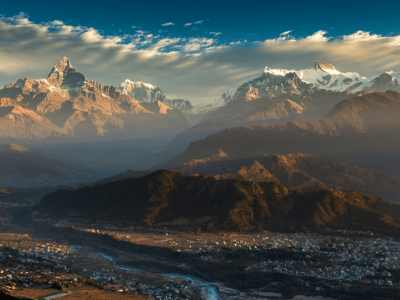
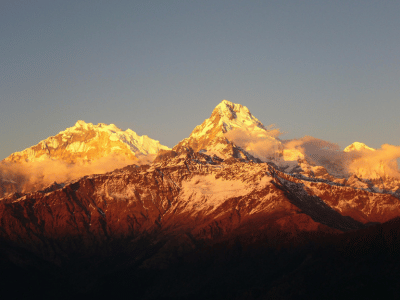
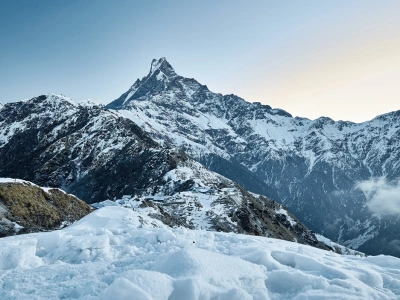
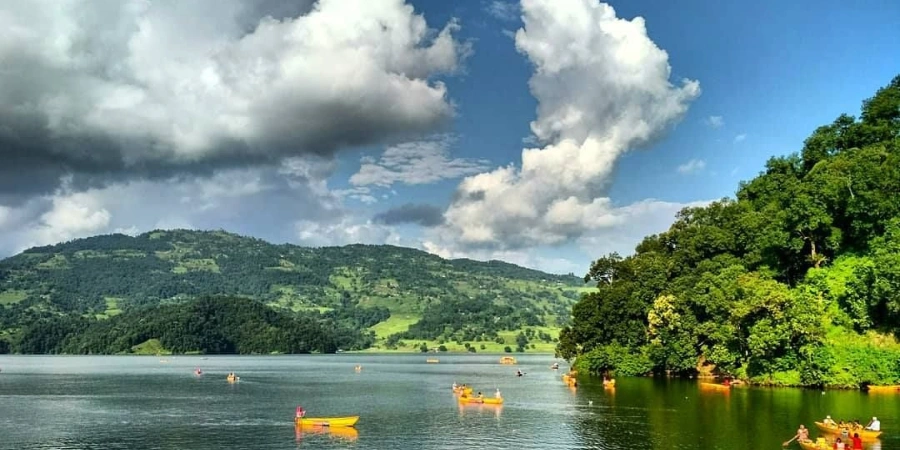
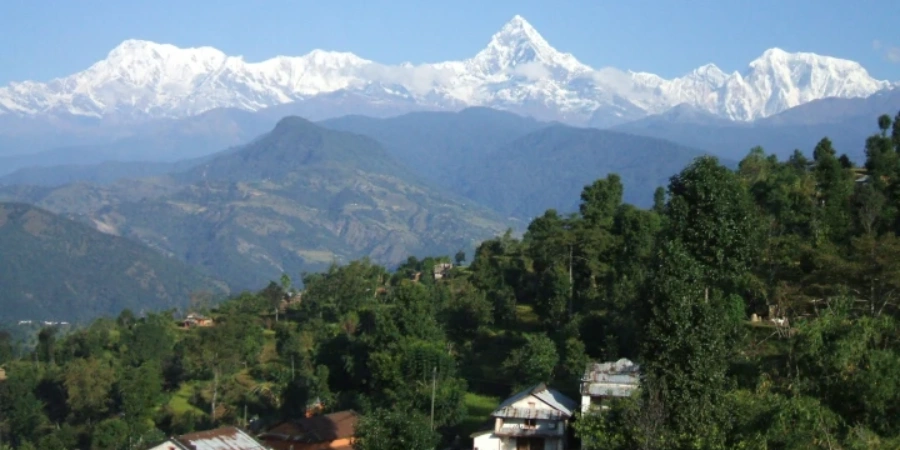
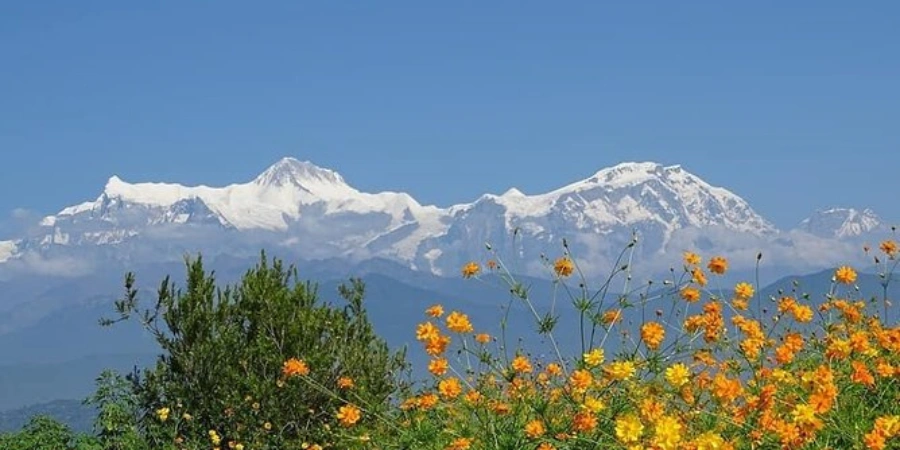
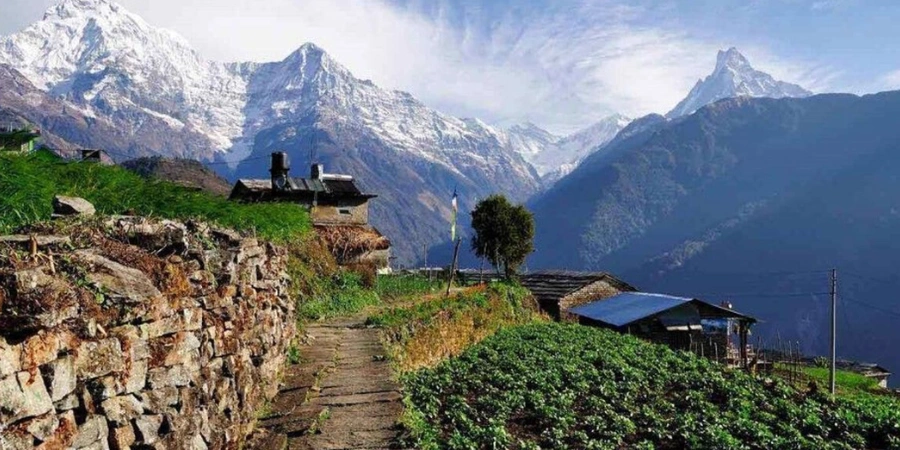
On this short Royal Trek in Nepal, you can see several mountains and lakes from a distance—clearly and in full view. After climbing to Kalikasthan, you can see the views of mountains like Annapurna, Machhapuchhre and Lamjung. Not only that. You can also observe the beautiful views of Begnas Lake and Pokhara Valley. Such breathtaking views aren’t available everywhere, so be sure to capture photos and videos—perfect for your camera, mobile, or Instagram reels, especially during sunrise and sunset.
The trail from Syaklung to Chisapani leads through some dense forest. As we start our journey from Syaklung to Chisapani, our journey will move through thick areas of rhododendron, oak and sal trees. In the forest, you will walk up and down the path. You will hear the sweet sounds of birds. You will feel the cold rising in an instant. The sound of some insects and grasshoppers will not let you be alone. You will suddenly see monkeys moving around. You will see some Himalayan birds dancing. Oh, and you will see some butterflies enjoying the flowers of the plants. When you get tired while traveling in the forest, some stone huts are made to relieve your fatigue. Where you can rest for some time and even sleep for a moment.
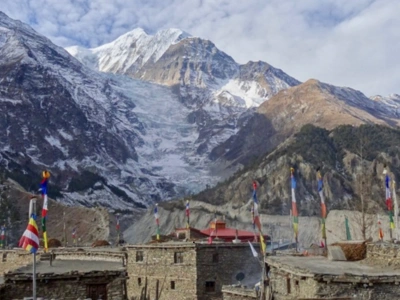
During the journey, you will reach some of the most ancient Gurung and Brahmin settlements of Nepal. The houses of the settlements are made of stone and wood. The villages are very original. Most of the locals in the village speak Nepali, but some of the youth speak English. The village is very lively during festivals. The Gurungs celebrate Losar, which is a Tibetan New Year. The Kshetri Brahmins celebrate Hindu festivals like Dashain and Tihar. Dashain is celebrated for ten days by worshipping Goddess Durga and enjoying delicious meat dishes with all the brothers, sisters and relatives. Tihar is the festival of light. Goddess Lakshmi is worshipped, and Deusi Bhailo is played. If you like such festivals and are planning to celebrate them, then you should travel during the autumn season (September-November).
Ready to experience the Royal Trek Nepal with Destination Unlimited Treks? Contact us today to book your 9-day Himalayan journey!
Royal Trek Nepal Highlights
- Royal Trek
This trek is a historical route that was first trekked by Prince Charles of England in 1980. So you can also experience this trek on this historical route. - Countryside Trek
The Royal Trek Nepal is a countryside trek. This trek offers the opportunity to visit picturesque traditional villages like Pokhara, Kalikasthan, Syaklung and Chisapani. - Mountain View
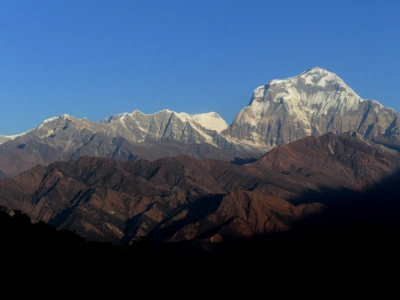
During the trek, you will be able to capture the panoramic views of Annapurna, Machhapuchhre (Fish Tail), and Lamjung Himal. - Photo and Reel Making
During this short trek, you can take photos and make reels at many places. Photo reels are especially good during sunrise and sunset. You will be able to take pictures with the mountains, hills, lakes and Pokhara in the background very well. - Forest Trek
The trek passes through rhododendron, oak and sal forests. The paths in the forest are uphill, downhill and steep. There are some stone-built huts for resting. - Observation of wildlife and flora
Not all wildlife can be seen at all times. Wildlife is especially visible in the morning, evening or in places with less human traffic. Wildlife such as the brown langur, Himalayan squirrel, barking deer (muntjack), common mouse, fox and rhesus macaque can be seen more. You can also see some trees such as sal, sisau, pine, rhododendron, etc. - Observation of ancient villages and settlements
You will see Gurung and Brahmin settlements made of traditional stone and wood during this trek. - Festivals
If you are trekking in the autumn season, you can participate in festivals like Dashain and Tihar.
Route Overview of the Royal Trek Nepal
Our first trip starts from Kathmandu. We spend half a day in Kathmandu visiting the Kathmandu Durbar Square and Swayambhunath. We stay at a hotel in Thamel for the night. At night, we prepare for the next day's trekking. We can reach Pokhara from Kathmandu in two ways. One is by road in a tourist bus, and the other is by air using domestic flights.
The road trip from Kathmandu to Pokhara will be special. This trip passes through Naubise, Muglin, Malekhu and Damauli to reach Pokhara. The road is paved. The road passes through the Trishuli river, through forests and jungles, and reaches Pokhara, the city of lakes. This day we stay in Pokhara, and the next day we trek to Kalikasthan.
From Pokhara, you can take a jeep to Vijayapur Khola. Pokhara takes 30 to 40 minutes to reach Vijayapur Khola. The journey from Vijayapur Khola to there is a village trip. We proceed through Archale and Chautara villages. These are old villages where Gurungs and Brahmins live. After passing through the settlement, we have to travel a little uphill through the forest. All these are dense forests of Sal and pine. The path to reach Kalikasthan is a little steep but can be easily crossed. We stay at Kalikasthan for the first night. There is a temple of Kali Bhagwati here. Kalikasthan is a mixed settlement of Gurungs and others. Here we stay in small tea shops or homestays.
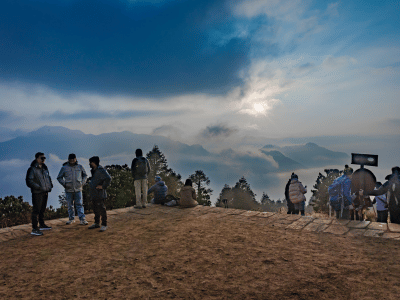
The next day, we travel to Syakalung. From Kalikasthan, we have to travel on foot for 5-6 hours to reach Syakalung. The path is somewhat easy to moderate in nature. We move from Kalikasthan through rice and vegetable fields. After walking for some time, we reach a stone-built pavilion. There you can rest for some time and take some photos. After this, the path moves through the forest. In season, this forest is covered with rhododendrons. After the forest, we reach Syakalung. Syakalung is a Gurung settlement as well as a Brahmin settlement. From here, one can also observe the views of many mountains, such as Annapurna, Machhapuchhre and Manaslu as well as Rupa Lake and Begnas Lake.
The entire route from Syakalung to Chisapani is downhill. It is a journey of about 12 kilometers. It takes about 5-6 hours to complete this journey. We descend through the dense forest of rhododendrons and pines. The path is covered with ferns and wild flowers. You can hear the sounds of birds. On this narrow path, you can easily see monkeys and langurs. After some time, we reach Chisapani. This place is called Chisapani because of the natural cold water. Chisapani is a settlement of Gurungs, Magars and Brahmins. This last night of our trek, we will spend it in Chisapani.
The next day, from Chisapani, we will return to Pokhara and rest from our trek.
Royal Trek Nepal – 9 Days Itinerary
Royal Trek Nepal —What to Expect
If you are looking for a short, scenic, peaceful and culturally rich trek without the crowds, Then the Royal Trek might be the perfect option for you.
The Royal Trek is a trek named after Prince Charles, who visited in 1980. You do not need to be physically fit to do this trek, nor do you need to have any previous experience. However, you do need to be able to walk for 3-4 hours a day. Anyone with a strong willpower can complete this trek with a royal feel.
During the journey, you will reach beautiful villages. You will travel through fields, vegetable fields and small narrow paths. Some part of the trek passes through dense forests. The forest is covered with pines, rhododendrons, and junipers. The sound of the cicadas and the music of the grasshoppers can be easily heard in the forest. A herd of langurs can also be easily seen. The possibility of getting tired while traveling is very low here. There will be no discomfort like traveling to Annapurna, Machhapuchhre (Fish Tail), or Langtang.
You will reach the highest place, Syaklung, which is only 1,730 meters high, so the possibility of getting altitude sickness here is zero. This trip is special for anyone who does not want to go too far and wants to take a short trip with friends and family.
You will stay in the old and rural settlements of Nepal. You will get to taste delicious Nepali food in the settlements. During festivals, you will get to celebrate festivals like Dashain and Tihar. You will get to study the lifestyle of the rural settlements of Nepal in a short time.
Whether you are a nature lover, a cultural explorer, or someone who craves the peace of the mountains, the Royal Trek offers a rewarding experience without the intensity of a long hike.
Royal Trek Nepal Cost —Full Breakdown
The Royal Trek Nepal is a beautiful and short hike through the Himalayas with cultural exposure for those travel the region in a short. You will walk for 9 days and have an opportunity to visit beautiful villages, and lush green forest but also see the great mountains. Before making plans it is best to have an approximate cost for the entire adventure.
Here’s the real cost breakdown—from flights to Snickers bars. Just what I paid for, what I wish I didn’t, and what was totally worth it.
Here’s a general breakdown of what’s typically included in a 9-day full-package trek with Destination Unlimited Treks:
If you’re looking for a low-altitude, easy-paced trek with rich culture and mountain views, the 9-day Royal Trek is an excellent and affordable adventure for travelers of all ages.
Difficulty and Physical Fitness Required
People call the Royal Trek Nepal “easy,” and yeah, compared to monster treks like Annapurna or EBC, it is. But don’t expect a flat walk in flip-flops. You’ll still hike 4–6 hours a day, climb some sneaky hills, and curse a few stone steps. It’s short, sure—but your legs will still feel it.
The best part? No altitude drama. The Royal Trek elevation tops out around 1,700 meters, so you can actually breathe. No meds, no headaches, just fresh air and mountain views. So yeah, “easy” is relative—but the Royal Trek? It’s doable, rewarding, and perfect for real people with average fitness who want a taste of the Himalayas without dying halfway up a pass. Just don’t forget to stretch. And maybe pack an extra Snickers.
Permits Required for the Royal Trek Nepal
Before you even think about lacing those boots, there’s some necessary stuff you have to deal with: permits. Yeah, paperwork, I know. You need two things: the ACAP (Annapurna Conservation Area Permit) and the TIMS card. They’re basically your official permission slips to roam around the Annapurna region without getting yelled at by park rangers.
You can grab these in Kathmandu or Pokhara—don’t let anyone tell you it’s complicated. It’s a bit like waiting in line for momos, nothing too crazy. But if you’re the type who hates paperwork (same), just pay your trekking agency to handle it. Done and dusted. I had Destination Unlimited Treks sort mine out, and it was smooth—less time on forms, more time dreaming about that next cup of chai.
Heads up: rangers will stop you and ask to see these permits on the trail. Lose them? Awkward fine and a lecture. So stash them somewhere safe but not buried under ten layers of sweaty socks. Trust me, it’s not worth the hassle.
Royal Trek Nepal vs. Other Short Treks in Annapurna
If you're looking for a short trek in the Annapurna region and everyone’s yelling “Poon Hill this!” and “Mardi Himal that”—pause. Breathe. And listen to someone who actually sweated through it, ate the dal bhat, and had their socks freeze on a windowsill.
Compared to the tougher Mardi Himal trek, which demands more fitness and higher-altitude hiking, the Royal Trek is beginner-friendly and perfect if you want a rewarding Himalayan experience without pushing yourself to the limit. It’s great for those looking for an easy trek near Pokhara that still delivers epic scenery.
So, if your goal is a low-altitude trek in Nepal with fewer crowds and real local vibes, the Royal Trek is your go-to. Less sweat, less stress, but all the Himalayan magic.
What is the best season to trek the Royal Trek in Nepal?
The best time to do the Royal Trek in Nepal is during the spring (March to May) and autumn (September to November) seasons. These months offer clear skies, pleasant temperatures, and the best mountain views of Annapurna, Machhapuchhre (Fishtail), and surrounding hills.
Why Spring (March–May)?
- Warm days and blooming rhododendron forests
- Green hills and colorful landscapes
- Great visibility of snowcapped peaks
- Mild weather—neither too hot nor too cold
Why Autumn (September–November)?
- Crisp air after the monsoon rains
- Excellent visibility and dry weather
- Lively local festivals like Dashain and Tihar
- Ideal for photography and cultural experiences
Seasons to Avoid:
- Monsoon (June to August): Trails can be muddy and slippery with limited views due to rain.
- Winter (December to February): Though still trek-worthy, it can be chilly in the mornings and evenings, and fog may block views.
Summary:
If you're looking for clear mountain views, comfortable walking weather, and vibrant local scenery, plan your Royal Trek in either spring or autumn. These are the ideal seasons for a safe, beautiful, and memorable trekking experience in Nepal’s lower Annapurna region.
Trip Essentials And Trip Information
Thinking about trekking in Nepal but want a short and easy trekking route? The Royal Trek is a perfect choice for beginners, families, and anyone looking for a peaceful trek near Pokhara. This scenic hiking trail offers breathtaking views of the Annapurna range without the usual crowds. Here's everything you need to know before starting your Royal Trek adventure in Nepal.
How To Book This Trek?
Booking your Royal Trek Nepal with Destination Unlimited Treks couldn’t be simpler! Our process is designed to be quick, secure, and stress-free so you can focus on the adventure ahead.
- Reserve online— Easily pay using Visa or MasterCard through our secure payment system.
- Prefer bank transfer? No problem—just reach out and we’ll share the details.
To confirm your booking, we ask for a minimum of a 20% deposit of the total trek cost, with the rest due when you arrive in Nepal. Once we receive your deposit, you'll receive:
- A booking confirmation email
- Your detailed itinerary
- Permit information and official invoice
Booking early lets us handle all the logistics smoothly, including permits, lodge reservations, licensed guide arrangements, and transport. It also ensures your spot during peak trekking seasons.
If you have any questions—about the trail, packing list, or logistics—just let us know. We’re here to help and ensure your Royal Trek in Nepal is safe, memorable, and uniquely rewarding.
Want to experience the Himalayas without pushing your limits? The Royal Trek could be just what you're looking for. It’s a short and scenic route, perfect for beginners or anyone who prefers slow travel over steep climbs.
Set near Pokhara, this peaceful trek winds through quiet villages, green hills, and fields that seem to go on forever. And yes, the mountains are always there in the background—beautiful and calm.
Here’s what makes it so approachable:
- Gentle Walking
No rough paths or extreme ups and downs. Just a few hours of easy walking each day—enough to feel active but never overwhelmed. - Low Elevation
You won’t go higher than about 1,800 meters. That’s lower than many mountain towns, so altitude sickness isn’t a concern here. - No Intense Prep Needed
If you’re used to daily walks or light exercise, you’re already set. Even if not, some movement in the weeks before you go—like walking or taking the stairs—will help. - Great Views, No Strain
The Annapurna range shows up big, but the trek keeps things calm. It’s less about endurance and more about soaking up the fresh air and scenery.
This trek suits families, older travelers, and first-timers just as much as it does curious explorers who want something laid-back but meaningful.
Try the Royal Trek—it’s quiet, beautiful, and easy to love.
Explore More Treks Around Royal Trek
Looking for gentle adventures in the Annapurna region? These short treks are perfect for travelers who want beautiful views, cultural experiences, and peaceful walking trails without too much difficulty.
Dhampus Sarangkot Trek – 8 Days
An easy trek near Pokhara, great for families and beginners. Over 8 days, enjoy stunning sunrise views of Annapurna, Machhapuchhre, and Dhaulagiri. Walk through quiet forests, visit Gurung and Magar villages, and experience authentic Nepali culture, food, and warm hospitality.
Annapurna Base Camp Short Trek – 6 Days
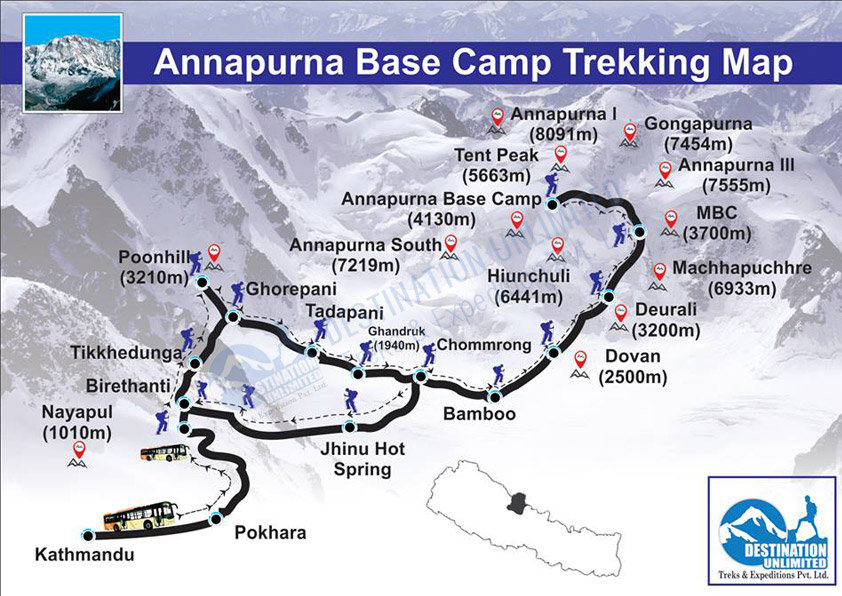
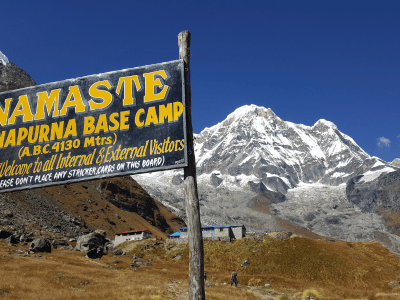
This 6-day trek takes you from Pokhara to Annapurna Base Camp (4,130 m). Hike through Chhomrong, Dobhan, and Deurali while enjoying close-up views of Annapurna I, Machhapuchhre, Hiunchuli, and Annapurna South. Along the way, discover the welcoming culture and lifestyle of Gurung and Magar villages.
Mardi Himal Trek – 5 Days
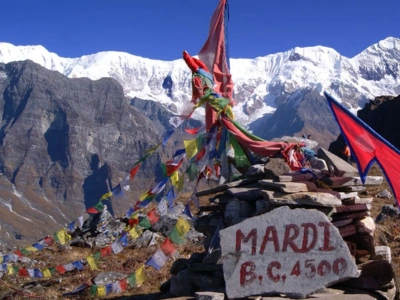
A short yet rewarding trek filled with nature, mountain views, and cultural encounters. Walk through rhododendron and oak forests, spot wildlife like Himalayan langurs and musk deer, and take in panoramic views of Machhapuchhre, Annapurna South, Hiunchuli, Tent Peak, and Mardi Himal. Stay in cozy teahouses run by local families and enjoy traditional meals like Dal Bhat, Local Chicken Curry, and Millet Raksi.