


Dhampus Sarangkot Trek—A Short & Scenic 8-Day Trek near Pokhara
Looking for a short and scenic trek in Nepal with spectacular mountain views and rich cultural experiences? The Dhampus Sarangkot trek is a great short and easy trek around Pokhara for 8 days. This trek offers a chance to see the magnificent views of the Annapurna and Dhaulagiri ranges, beautiful hill villages and unforgettable sunrises. The trek reaches Dhampus and Sarangkot (1,750m), starting from the foothills of Dhampus. You can visit the Dhampus Sarangkot trek in spring (March-May) or autumn (September-November) to fully enjoy the Dhampus Sarangkot trek.
This is a natural and cultural trek. The trek progresses through the hill gorge through narrow paths in the forest. The Dhampus Sarangkot trek enters the traditional Gurung settlement and finally reaches the breezy Sarangkot (1,750 m), from where you can enjoy the sunrise.
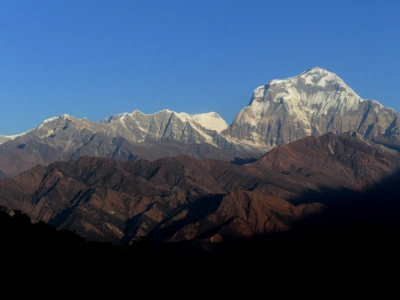
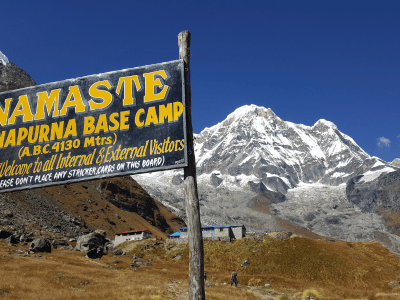
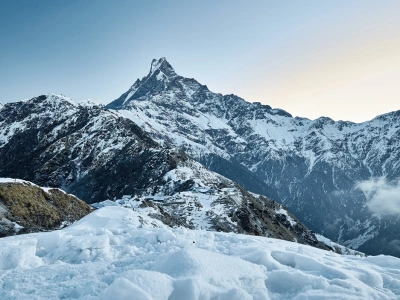
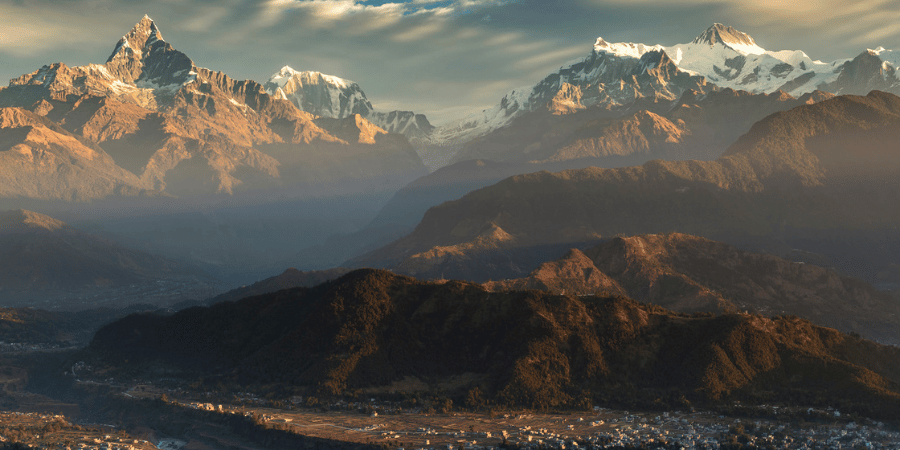
After proceeding from the foothills of Dhampus, the trek begins. The trek climbs through the hills and enters the dense forest. Sometimes you travel on a flat path, sometimes in a dense forest of sal and pine. Sometimes you have to climb stairs made of stones, and sometimes you have to travel through the middle of the village. From Dhampus, you can see the distant Himalayan views. Panoramic views of Machhapuchhre (Fish Tail), Annapurna South, Hiunchuli, Dhaulagiri, and Pokhara Valley can be easily seen from Dhampus. Many of the trails of the trek are generally uphill and downhill. Small tea shops and snack houses can be easily found to rest in between the trek. You can also see the scene of locals working in the fields. If you travel in season, you can experience Nepali farming by working in the fields with the locals.
The trek through the forest and jungle is very enjoyable. You can hear the sounds of birds in the forest. You can find small streams and springs. In the cold season, blood-sucking worms and slugs are easily found. During the day, when there is little sunlight, you can hear the chirping of crickets and grasshoppers. Especially In the evening, if you are on the forest path in the cold season, you can hear the chirping of some jackals and even see wild jackals. In this forest, you can see white and red langurs and monkeys. These monkeys can be seen in large numbers. Most of the Himalayan birds can also be seen in the forest. Sal, pine and barren trees are often found in the forest, and rhododendrons are abundant. The forest floors are covered with ferns, Banmara (crofton weed), Titepati (mugwort), etc. To be honest, this forest journey is very enjoyable.
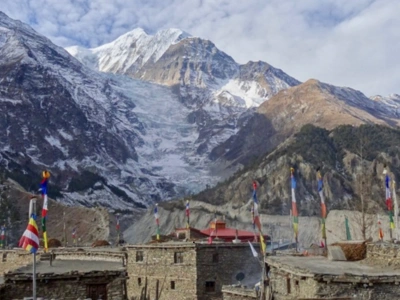
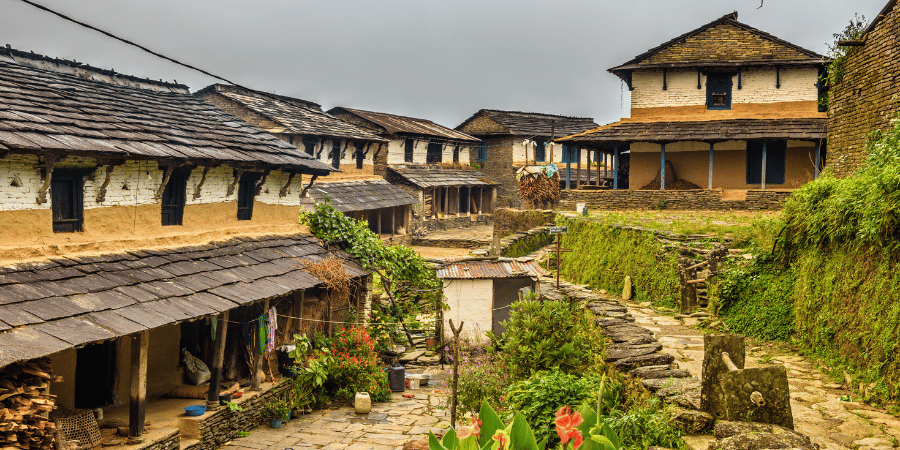
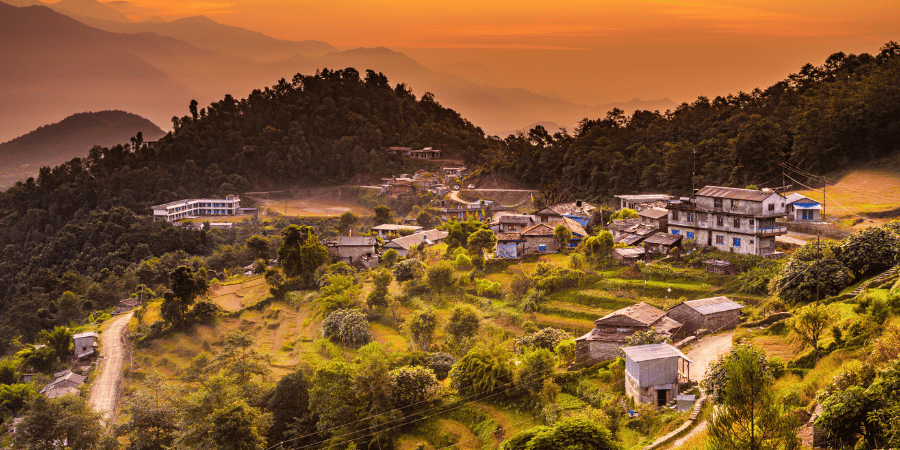
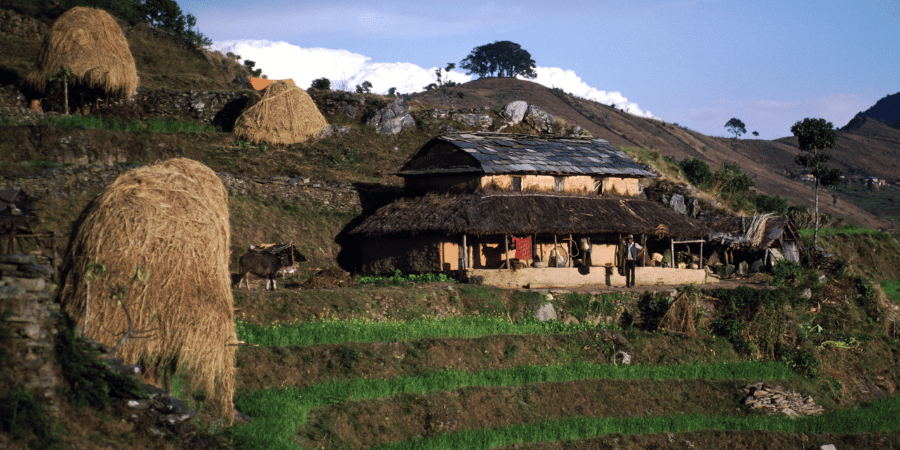
You will visit ancient villages of Nepal like Dhampus, Naudanda, Astam village, Kaski village, and Sarangkot (1,750 m). You can enjoy organic farming and homestays in Astam village. Many Kshetri, Brahmin, Gurung and Magar castes live in the village. Most of them are based on agriculture. Most of the houses are made of stone and have thatched roofs (Khar in Nepali). Some modern concrete houses can also be seen, especially in the market area. You will get to eat delicious Nepali dishes like Dhido, Gundruk, and local Rakshi in the village. Most of the people are Hindus, and some Buddhists live there.
If you visit there during festivals, you can celebrate festivals like Dashain and Tihar. These festivals are celebrated together with family and friends. During the festivals, God is worshipped and delicious dishes are prepared. You can also celebrate Losar, which is a Tibetan New Year. You will also be able to see dances like Rodhi Nach and Maruni Nach with Nepali instruments and special festival dances like Deusi Bhailo.
Sarangkot: World Famous Sunrise View and Paragliding
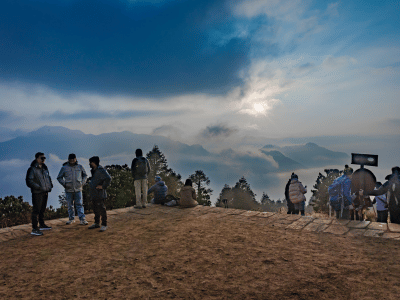
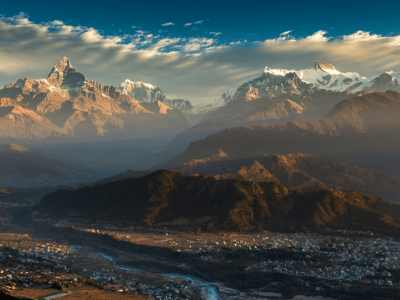
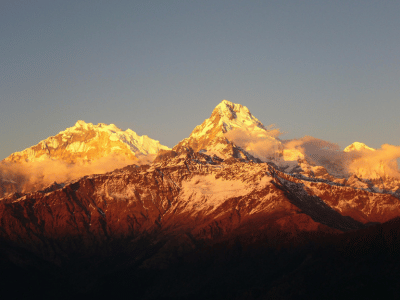
This article cannot be complete without talking about Sarangkot Sunrise View and Paragliding. You can climb the tower of Sarangkot to watch the sunrise early in the morning. When the sun's rays hit the mountains and hills, you can see a golden view. The weather changes every now and then. You can easily see the view of Pokhara from Sarangkot. When the weather is clear, you can see the shadows of the mountains on the Fewa Lake. This will be a very rare moment for the photographer. Don't forget to take photos and make a reel!
You can do paragliding from Sarangkot. This paragliding starts from the peak of Sarangkot and lands near Fewa Lake in Pokhara. This 20-30 minute paragliding can be unforgettable for anyone. While paragliding, you can easily see Annapurna, Machhapuchhre, Pokhara Valley, Fewa Lake, forests and hill villages. Although paragliding is not included in this package, you can customize it and include it.
This Nepal visit can be truly enjoyable if done properly. You can contact us and speak with our expert team to make this trek successful for you.
Dhampus Sarangkot Trek Highlights
- Amazing Sunrise Views
Sarangkot is world famous for its sunrise. Along with the Himalayan views, you will witness the sunrise in the morning. When Annapurna, Dhaulagiri and Machhapuchhre are reflected in the Phewa Lake, this moment is unforgettable for everyone. - Traditional Villages and Cultural Experiences
This trek will give you a great opportunity to explore ancient hill settlements like Dhampus, Ashtam, Naudanda, Kaski and Sarangkot. You can see the local lifestyle, stone houses, and terraced farms and experience the warm hospitality of the Gurung, Magar, Brahmin and Kshetri communities. - Experience local cuisine and homestays
You will taste authentic Nepali dishes like dhido, gundruk and local raksi (local wine) at the village tea house or homestay. Ashtam Village offers an unforgettable organic village lifestyle experience. - Enjoyable forest treks and wildlife encounters
You will walk through peaceful forests filled with sal, pine and rhododendron trees. You will also come across mountain birds, langurs, monkeys, and possibly wild jackals. The treks are rich in flora like ferns, Banmara (crofton weed) and Titepati (mugwort). Such forest treks will give you a unique experience. - Festivals and traditional dances
If you love celebrating folk culture and festivals, visit Nepal during the season. You can participate in Hindu festivals like Dashain and Tihar. You can also celebrate Lhosar of the Gurung people. You can also enjoy cultural dances like Rodhi Nach, Maruni and Deusi Bhailo. - Optional Paragliding Adventure from Sarangkot
A 20-30 minute paragliding flight from Sarangkot to Lakeside takes you above the Pokhara Valley. You can fly like a bird in the sky and see the Himalayas, Phewa Lake and terraced hills. - A photographer's paradise
You can capture the changing colors of the mountains at sunrise and sunset, the daily life of the locals and the serene nature views in your reels, vlogs and photos.
Route Overview of the Dhampus Sarangkot Trek
Our journey starts from Kathmandu. On the first day, we will visit the UNESCO World Heritage Sites in Kathmandu. You will visit Swayambhunath, Pashupatinath, Kathmandu Durbar Square and Boudhanath Stupa. Overnight, you will stay at a hotel in Thamel. The next day, we will travel to Pokhara by tourist bus. This road trip takes 8-9 hours through hills, rivers, and villages to reach Pokhara.
The main trek to Dhampus Sarangkot starts from the foot of a small village about 30 minutes from Pokhara. At the foot of Dhampus, we have a cup of tea. Then the guide tells you to tie your boots, tie your bag and get ready for the journey. The journey gradually climbs towards Dhampus village through forest paths and fields. You climb up the stone stairs slowly. In this way, the path slowly moves through the forest. As you climb up, panoramic views of Annapurna South, Hiunchuli, Machhapuchhre (Mt. Fishtail) and Dhaulagiri begin to appear from near Dhampas.
We spend the first night of the trek at a teahouse in Dhampas. There you will have Nepali food as dinner. You will get himalayan style beds and room for accommodation. You will enjoy sleeping here because of the Himalayan climate.
The next day we travel to Sarangkot. The trail gradually leads to Ashtam Village, a peaceful eco-village known for organic farming, homestays and breathtaking sunset views over the mountains. The trek proceeds through the rural routes of Naudanda and Kaski villages. During the trek, you will get to see the real Nepali way of life up close. You will see people working in the fields, carrying loads, sitting and chatting. You will also see some schoolchildren carrying backpacks to school.
These treks do not only proceed through the village paths. The trek sometimes meanders through dense forests of sal and pine, reaching paths filled with wild plants like rhododendron, fern, mugwort (titepati), and banmara (crofton's bush). You can sometimes see wild animals like langurs, monkeys, and jackals early in the morning or in the evening.
After such a jungle trek, you will finally reach Sarangkot (1,750 meters), which is the last and most scenic stop of the trek. Here we stay for one night. There are hotels with good service and facilities here. The next day we return to Pokhara. Thus ends our Dhampus Sarangkot trek.
Dhampus Sarangkot Trek —What to Expect
The Dhampus Sarangkot Trek is a beautiful and short trek from Pokhara, suitable for all the new trekkers, families, or anyone who wants a taste of the Himalayas or the extensive physical exertion that comes from a high-altitude trek. Over the course of 8 days, you will hike through quiet villages, terraced fields and forest trails - appreciating not only nature moderate, but cultural environments too.
Starting in Pokhara, you will gradually make your way to Dhampus - a Gurung, traditional village, known for its good hospitality, tasty food and fabulous mountain views. The terrain varies from easy to moderate which means that you do not have to be an extreme trekker to enjoy the trails. Throughout your trek you will pass through small villages and village life, while appreciating some amazing views of Annapurna and Machhapuchhre (Fishtail) mountains.
To top it off, the final highlight of the trek is Sarangkot known for its wonderful sunrise over the Himalayas and Pokhara Valley. From this vantage point, you can view Phewa Lake glistening in the sunlight below you. You have plenty of photo opportunities, but you also have some time to just be and soak-it all-in when you arrive.
Overall, this trek is a great find! You have the best of both worlds: great Himalayan scenery, a cultural exchange, and, most importantly, a tranquil walk in nature in just over a week! The trek is perfect for anyone looking for a short adventure that is easier on the legs, but each day - has the opportunity for you to ooh and ahh along the way.
Dhampus Sarangkot Trek Cost—Full Breakdown
Alright, so you’re eyeing the Dhampus Sarangkot Trek? Sweet choice. Seriously, it’s like the “best bang for your buck” version of trekking in Nepal. Unlike those wallet-crushing Annapurna or Everest expeditions, this one’s chill on your finances—no need to sell a kidney or anything. You still get all the good stuff: killer mountain views, a taste of the local scene, and you’re not huffing and puffing at some insane altitude.
Most of your cash goes to the usual suspects: permits, a bed to crash in, meals (dal bhat, anyone?), getting around, and maybe hiring a guide or porter if you’re not up for carrying your life on your back. Prices bounce around a bit depending on if you’re rolling solo, tagging along with a squad, or letting a travel agency handle the nitty-gritty. Don't worry, we, Destination Unlimited Trek, provide this package, including accommodation, food, guides, portera and permits. If you buy our package, then you don't need to think anything about the trek.
So, here’s the lowdown on where your money’s likely to go:
Difficulty and Physical Fitness Required
Let’s be honest—no one wants to be that person struggling up the trail while everyone else enjoys the views.
The good news? Our 8-day Dhampus Sarangkot trek is designed for real people, not mountain athletes. If you can handle a 4–5 hour walk with breaks (and don’t mind the occasional uphill), you’ll do just fine.
I’ve guided everyone from couch potatoes to marathon runners on this route, and here’s what actually matters: decent stamina beats brute strength. The trails wind gradually through villages and forests, with plenty of chances to rest at teahouses or snap photos of the mountains.
The highest point (Sarangkot) sits at just 1,600m – low enough that altitude sickness isn’t a concern, unlike some other Annapurna treks.
Compared to other regional hikes:
- Easier than Poon Hill (no 3,800 brutal stone steps)
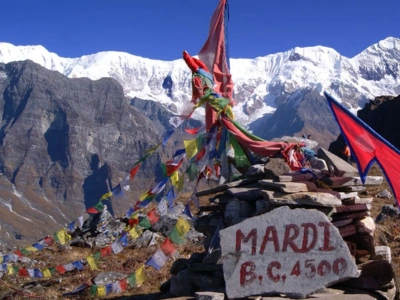
- More relaxed than Mardi Himal (shorter days than its steep final climb)
- More rewarding than Australian Camp (extra days spread out the effort)
The secret? We plan short hiking days (3–5 hours) with afternoons free to explore or relax. Our guides know how to pace the group—nobody gets left behind.
That said, if you can walk 10,000 steps a day at home (with some hills), you’re already prepared. The rest? We’ll help you with the details, from packing light to using trekking poles.
Pro tip from our guiding experience:
The fittest trekkers aren’t always the ones who enjoy it most. It’s the people who take their time, chat with villagers, and soak in the journey that come back happiest.
Permits Required for the Dhampus Sarangkot Trek
Before beginning the Dhampus Sarangkot Trek—part of the Annapurna region—you must obtain two key permits. The Annapurna Conservation Area Permit (ACAP) grants access to the protected area, while the TIMS Card (Trekkers’ Information Management System) ensures trekkers are registered and monitored for safety. These permits are required for all foreign nationals trekking in the Annapurna region and can be arranged at the Nepal Tourism Board offices in Kathmandu or Pokhara. Agencies like Destination Unlimited Treks typically handle the paperwork for you. Make sure to keep your permits on-hand during the trek, as rangers may check them at trail checkpoints
Dhampus Sarangkot Trek vs. Other Short Treks in Annapurna
When choosing your Himalayan adventure, it helps to know how different treks compare. Our 8-day Dhampus Sarangkot trek sits perfectly between Nepal's most popular routes—it's more immersive than the rushed 2-day versions, yet less demanding than classics like Poon Hill or Annapurna Base Camp. While the shorter Dhampus trips give you just a taste, we've designed this extended itinerary to let you truly settle into mountain life. You'll wander beyond the standard trails to quiet villages where few tourists go, with time to actually chat with local teahouse owners rather than just passing through.
Compared to the famous Ghorepani Poon Hill circuit, you'll get similarly breathtaking sunrise views over the Annapurnas from Sarangkot, but without battling crowds on those endless stone steps. Where Poon Hill feels like a pilgrimage for Instagrammers, our route maintains that sense of discovery. Against the Mardi Himal trek, we keep the altitude lower (better for first-timers) while still delivering those heart-stopping mountain vistas. And if you're considering the Australian Camp route—well, we actually include its best viewpoints as part of our extended journey, plus so much more.
What really sets this apart from other Annapurna treks is the pace. We've replaced the typical "hike hard, sleep, repeat" rhythm with space to breathe—lazy mornings watching the light hit Fishtail Mountain, afternoons exploring side trails, and evenings learning to make momos with local families. It's ideal for those who want more than just ticking off miles but aren't looking for the physical challenge of longer high-altitude treks. After a decade guiding here, I can confidently say this extended Dhampus-Sarangkot itinerary offers the region's best balance of scenery, culture and comfort.
What is the best season to trek the Dhampus Sarangkot Trek ?
So, you’re eyeing the Dhampus Sarangkot trek, huh? Solid choice. But timing—yeah, that’s kinda the whole game here. If you want those “wow, is this even real?” mountain views, you’ve got to aim for spring (March to May) or autumn (September to November). Trust me, these months are like Nepal showing off: clear blue skies, chill temps, and those Himalayan peaks looking all mysterious and epic. Perfect for snapping a million photos or just zoning out on a quiet walk.
Alright, here’s the scoop:
- Spring (March-May): This is when the hills go full Instagram mode. Rhododendrons everywhere—like, reds, pinks, the whole thing. Days are warm but not “is my shirt glued to me” warm. Basically, you’ll want to take your time and just soak it all in.
- Autumn (Sept-Nov): Oh man, the air is so crisp you’ll feel like you’re in a fancy water commercial. The clouds know to stay away, and the big hitters—Annapurna South, Machhapuchhre (that’s Fishtail, for the uninitiated), Dhaulagiri—they all show up for the party. It’s kinda the GOAT season for this trek.
Now, about winter and monsoon—let’s be real:
- Winter (Dec-Feb): It gets nippy. Mornings are cold enough to make you question some life choices, but hey, no crowds, and the views are still solid. Just don’t skimp on the layers unless you enjoy shivering for fun.
- Monsoon (June-Aug): Unless you live for mud and surprise leeches, maybe skip this one. The rain turns the trail into a slip-n-slide, and the mountains? Yeah, they’re hiding behind a gray curtain. But, if you’re into off-grid monsoon madness, you do you.
Honestly, whether you’re all about those springtime flowers or autumn glow, Dhampus Sarangkot doesn’t disappoint. Just pick your moment, pack smart, and the Himalayas will absolutely blow your mind.
Quick tip: Want the mountains to yourself? Go early March or late November. Fewer people, same killer views. Go on, get trekking!
Explore More Treks Around Dhampus Sarangkot Trek
Discover other exciting trekking routes in the Annapurna region that offer diverse landscapes, cultural experiences, and adventure.
Royal Trek Nepal
The Royal Trek is a short and scenic 9-day trek in the Annapurna region. Starting from Pokhara, the trail passes through Kalikasthan, Syaklung, and Chisapani. It is an easy to moderate trek, perfect for beginners and those wanting a relaxed Himalayan adventure. You can trek in spring (March–May) or autumn (September–November). The route was first trekked by Prince Charles in 1980, giving it the name “Royal Trek.
Khorpa Danda Trek Annapurna Dhaulagiri Community Trek
The Annapurna Dhaulagiri Community Trek is a 15-day off-the-beaten-path adventure that takes you to Khopra Danda (3,660 m) and the sacred Khayar Lake (4,660 m). Walk through rhododendron forests, traditional Gurung and Magar villages, and enjoy panoramic views of Annapurna, Dhaulagiri, and Nilgiri while staying in community-run lodges with authentic Nepali hospitality.
Annapurna Base Camp shortest Trek - 6 Days
This short and adventurous trek offers a fast track to the Annapurna Sanctuary. Over 6 days, cross diverse landscapes including forests, rivers, and high hills, explore Himalayan villages, and capture stunning panoramic views of the Annapurna range.
Trip Essentials And Trip Information
Planning to do the Dhampus Sarangkot Trek? Great choice. It’s one of the most beginner-friendly and scenic short treks near Pokhara. Here’s what you should know before you go:
Visa Information:
Most travelers need a Nepal Tourist Visa. You can get it on arrival at Tribhuvan International Airport (Kathmandu) or any land border crossing.
- 30-day visa: Approx. USD 50
- Make sure your passport is valid for at least 6 months
Currency & Exchange:
In Nepal, we use Nepali Rupees (NPR). Right now, you'll get about 135 rupees for every US dollar. The easiest places to exchange money are at banks or licensed exchange counters in Kathmandu or Pokhara. While you'll find ATMs in cities often charge withdrawal fees—and in remote mountain areas, they might not work at all. That's why it's always good to keep some cash with you, especially smaller bills for tea houses and local shops.
Travel Insurance:
Having travel insurance is strongly recommended, even for easy treks like Dhampus Sarangkot. Choose a policy that covers:
- Trip cancellations or delays
- Medical treatment and emergency evacuation
- Lost or stolen baggage
Even though this trek doesn’t go to high altitudes, insurance gives you peace of mind in case of unexpected situations like weather changes or injury.
Carry a printed or digital copy of your insurance policy, and make sure your trekking company has your insurance info during the trip.
How To Book This Trek?
Booking the Dhampus Sarangkot trek? Honestly, it’s super chill. No need to stress.
Just leave us a message or book online using your Visa or MasterCard through our secure system. If you're not into cards, no problem—we also accept bank transfers. Just ask and we’ll send you the details.
We do ask for a 20% deposit to lock in your spot, and then you can pay the rest once you're here in Nepal. Cash or card, both are fine. Once we get your deposit, boom—you’ll get a confirmation email with your itinerary, permit info, and all that.
It’s better if you book early, especially in the busy season. That way we’ve got time to handle your permits, sort out your hotel, your guide, local transport—the works.
Got doubts? Or need help? Just drop us a quick message. We’re always around and happy to help you sort things out. Simple, safe, and honestly, pretty exciting once it's all locked in. Let’s go!