


Kanchenjunga Base Camp Trekking Overview
If you are looking for a remote rural trek, then the Kanchenjunga Base Camp Trekking is the perfect one for you. In this trek, you will visit the third highest mountain in the world and its surrounding rural areas of eastern Nepal. It is also one of the protected areas of Nepal named Kanchanjunga Conservation Area. Here, you will experience the atmosphere and environment of traveling away from the urban hustle and bustle. Kanchenjunga trek is a beautiful natural palace and a famous tourist destination, but rarely crowded with tourists. Since it is a remote area to the east of the capital Kathmandu. This trek is the right choice for you if you have a bit longer time for trekking and like to travel long distances. In this trek, you will be able to travel from the plain land of Jhapa to the base camp of Kanchenjunga. You will also need some experience in hiking for this trek. Since it is in a restricted trekking area, you need to get a restricted area entry permit to trek here. Spring and autumn are the best times to trek here.
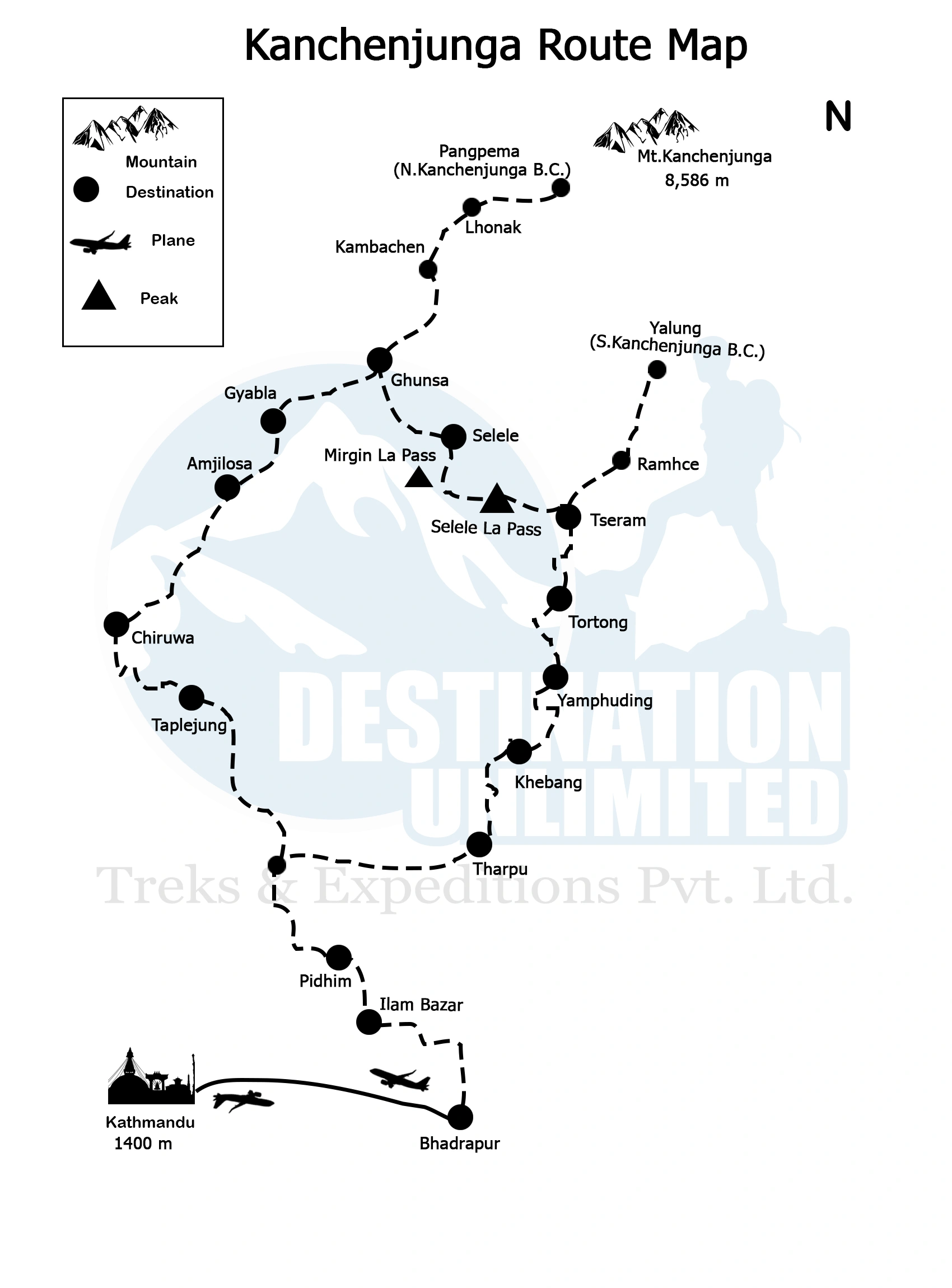
You have to fly from Kathmandu to Bhadrapur for this trek. Then, from Bhadrapur, you have to travel by road to Taplejung via Ilam. The real trek starts from Taplejung. From Taplejung Bazaar, you have to reach Ghunsa via Chiruwa and Gyabala. After resting for an extra day in Ghunsa, you will proceed towards Pangmepa, the base camp of Kanchenjunga. After visiting Pangmepa, you will return to Ghunsa and take the eastern route uphill to Selele Pass. After Selele Pass, you will visit Oktang, the eastern base camp of Kanchenjunga. From there, you will reach Khebang village via Yamphudin. The road journey towards Bhadrapur airport starts from Khebang village. You will fly from Bhadrapur to Kathmandu. This way, you will complete your enjoyable Kanchenjunga Base Camp trek in Nepal.
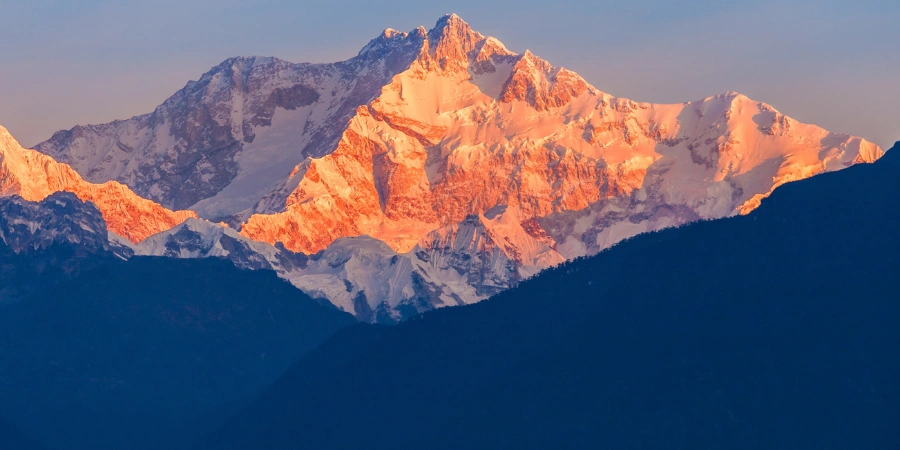
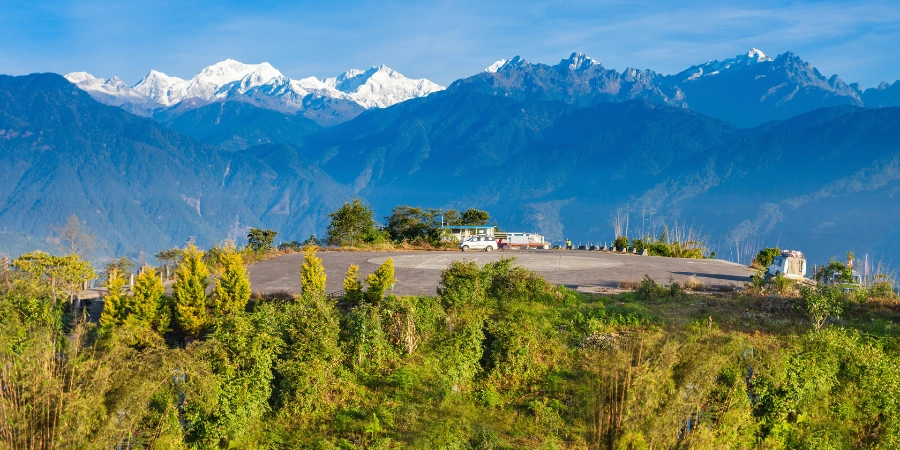
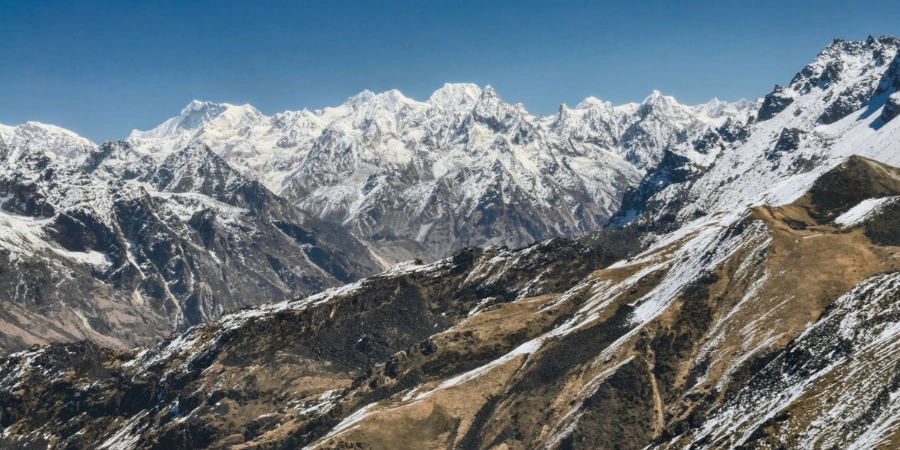
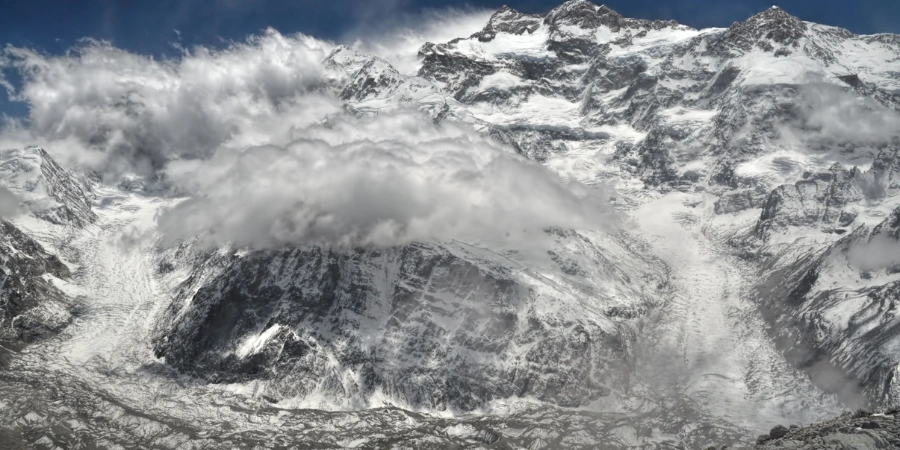
The outstanding panoramic view of world-class mountains makes you so excited during the Kanchanjunga Base Camp Trek. World-famous mountain Kanchenjunga ( 8586 meters), is the main highlighted mountain here. In addition, the 8000-meter-high mountains of Everest (8,488meters) and Makalu (8,463meters) can also be seen here. In the spring, there is a crowd of mountain climbers here at Kanchanjunga Mountain. Mount Kanchenjunga West, also called Yalung Kang (8,505 meters), is another one you will see during the trek. You can also see Jannu (7,710 meters) mountain while you are trekking.
You will observe cultural diversity up close in the Kanchenjunga Base Camp Trek. Rai, Limbu, and Sunuwar are the local communities living in the lower part of this region. They celebrate Dashain, Tihar, Sankranti, Chasok Tangnam, and Udhauli with cultural shows. The influence of both Hindu and Kiranti religions is equally visible here. In the autumn season, you will be able to see the interesting surroundings and hustle-bustle of such festivals. In the upper part of Taplejung, there is more influence of Buddhism. Here you can see more Monasteries, Manes Wall, Chaitya, and Meditation Centers. In this Himalayan region, you will be able to observe the Himalayan lifestyle, daily routine, and Buddhist cultural traditions like Losar, Buddha Jayanti, Buddhist religious rituals, and regular worship in the monasteries are held in this region. Buddhist people offer religious flags and oil lamps during the festivals. Mantras are recited by the gurus, and prayers for peace and good fortune are offered. This kind of unique culture is the center of attraction of this region, which you will observe up close on this trek.
You will also observe various wildlife and vegetation in this conservation area. So, it is rich in natural diversity. The vegetation includes Maple, Fir, Oak, Bamboo Groves, Pine, Orchid, and Rhododendron in the lower part of this region. In the higher altitude region, blue pine, juniper, various wild flowers, herbal plants, and alpine shrubs are found. This is the natural habitat of many wildlife such as Langur, Wild Boar, Ghoral, Himalayan Thar, Musk Deer, Snow Leopard, Blue Sheep, and Black Bear. These various mammals are the attractions of this trek. You will also have a good chance to see beautiful birds such as Himalaya Monal, Jungle Fowl, Snow Pigeon, Blood Pheasant, and some other birds like Vulture, Golden Eagle, and more. This will make your trek more interesting.
We will arrange for you to stay in small hotels during the trek. These hotels are run by local families, and it is also called tea house lodges. The food and accommodation in these lodges are basic but very clean and comfortable, warm hospitality, rustic food and drinks, and good service are the special features in these lodges. You will get to taste the local dishes made of vegetables, lentils, rice, and potatoes etc., grown in their own farm. This gives not only more freshness, but it is also an opportunity for you to mingle with the locals. During this trek, you will also experience the unforgettable joy of staying in such hotels.
Kanchenjunga Base Camp Trekking Highlights
- Stand close to the world's third-highest mountain
Here is a unique chance to get to the world's third highest mountain peak, Kanchenjunga (8, 586 m.) Base Camp. Along with that, this trip will never be forgotten because of the spectacular views of Everest (8, 488 m.), Makalu (8, 463 m.), Yalung Kang (8, 505 m.) and Janu Himal (7, 710 m.).
- A quiet and remote trek with fewer crowds
You will find this trek in the less-developed Eastern Nepal area. It is quite a trek away from the usual tourist spots, so it is a perfect option for nature lovers who prefer solo travelling and want to have a peaceful environment. Here, you get an extraordinary opportunity to be in touch with the natural world while living a life that is very different from that of a city dweller.
- The hike from the Terai to the Himalayas
Take an excursion from the plains of Jhapa all the way to the Kanchenjunga Base Camp, experiencing all of the wonderful geographical variety of Nepal as you move through Ilam, Taplejung, Ghunsa, and on to the spectacular high-altitude trail in the Himalayas.
- A unique experience of protected and restricted areas
This trek which is located in the Kanchenjunga Conservation Area, is a special one that requires a Restricted Area Permit. Because of this, the area is still kept in its pristine, safe and natural condition.
- A Long trekking expedition for experienced trekkers
Only those who have some experience in trekking and are capable of traveling with sufficient time, and are willing to physically and mentally challenge themselves, would be the ideal candidates for this trek due to the distance and altitude. Also, it is a very rewarding journey.
- Observation of both the North and East Base Camps
Another great feature of this trek is that you can observe both Pangpema (North Base Camp) and Oktang (East Base Camp). The Himalayan views from the Sele Pass make the trip more thrilling.
- Diverse cultivated cultures
In the lower reaches of the region, you can visit with various cultures through their festivals (eg, Dashain, Tihar, Chasok Tangnam, Udhauli) through the Rai, Limbu, and Sunuwar peoples. In the upland areas, you see the influence of Buddhism in the form of monasteries and their culture through mane walls, chaityas, prayer flags, and rituals showing the way of life in the Himalayas.
- Buddhist influence and the Himalayan way of life
This area has a very strong sense of tranquillity, where you will see Buddhist followers practising their faith by engaging in religious ceremonies such as Losar, Buddha Jayanti, Regular worship, Mantra reciting, and lighting lamps.
- The area also has various Biological and Wildlife habitats
This Conservation Area produces many native forms of plant life, including bluebird, oak, bamboo, juniper, herbs, and alpine plant life. You will also be able to view some very rare wildlife species, including snow leopard, musk deer, Himalayan Thar, blue sheep, black bear, langur, and various species of birds such as gannets, blood pheasants, Himalayan pigeons, and golden eagles.
- An intimate experience of staying in a local tea house
Staying in a locally-owned tea house (tea house lodge) offers a friendly and comfortable environment. The tea house lodge will be managed by the owners of the property (the lodge), ensuring intimate hospitality, basic and clean facilities, and a true experience of rural living. Eating the vegetables, legumes, rice and potatoes grown in their garden adds to the enjoyment of your journey.
A perfect blend of nature, culture, and adventure
The Kanchenjunga Base Camp Trek is a perfect combination of natural beauty, cultural richness and adventure. This trek is truly special and unique for those looking for a memorable Himalayan journey.
Route Overview of the Kanchenjunga Base Camp Trekking
First day:
We will come to receive you in Kathmandu on your Arrival at Tribhuvan International Airport. Then we will transfer you to the hotel and give you a briefing in the evening about trekking to Kanchanjunga base camp.
Second day:
We will make your restricted area entrance and other required permits. At the same time, you will go for a sightseeing tour to the world heritage sites in Kathmandu with the guide.
Third day:
You will fly to Bhadrapur airport in Jhapa district, the Eastern part of Nepal. Then we will drive to Phidim (1712 meters) in Ilam district. It is almost 145 km and takes approximately 5 hours. Overnight stay at Phidim. Overnight at Phidim.
Fourth day:
You will drive to Taplejung for 9 hours from Phidim. This is an interesting road trip in a hilly area. A distance that covers approximately 135 km.
Fifth day:
The trek to Chiruwa (1270 meters) is a short and low altitude trek. The trek passes through Limbu villages and crosses some rivers. This is an easy walking part of the trek , because of the low altitude.
Sixth day:
The trek to Sekathum (1576 meters) trail goes through the alder forest and cardamom farm and terraced field. This is moderate level trek. You will pass some rural villages and you will reach Sekathum in 5- 6 hours.
Seventh day:
You will trek to Amjilosa (2520 m) following the ascending trail. It takes 5- 6 hours. The trail crosses the river and follows a dense forest of rhododendrons and more.
Eighth day:
You will walk uphill and downhill for trekking to Gyabla (2730 meters). You will trek for 5-6 hours, and the trail includes waterfalls, forest and several teahouses.
Ninth day:
Trek to Ghunsa ( 3595 meters) is an interesting one. You walk through the forest and cross villages and this is gradually ascending. It takes 5-6 hours.
Tenth day.
You will take one day of acclimatization at Ghunsa. This is the main village in the route. Here you can take a free day for rest.
Eleventh day:
The trek to Khambachen (4050 meters) trail goes alongside Ghunsa khola. It is gradually ascending and the trail includes an alpine view and forest as well.
Twelfth day:
You will trek to Lonak (4780 meters). This is a high altitude trek. It offers a fantastic view of Kumbhakarna Mountain. This is a 5 - 6 hours trek in an alpine landscape.
Thirteenth day:
This is the day for trekking to Kanchanjunga base camp. It is called Pangpema (5143 meters). This is gradual ascending which includes the view of a snowy mountain.
Fourteenth day:
You will stay one more day at Pangpema, where you will walk around and have a wonderful excursion. This will be the perfect holiday for you in the mountains.
Fifteenth day:
From Pangpema, you will trek to Ghunsa (3595 meters), which is descending trail through the forest and you will return down to Ghunsa village.
Sixteenth day:
Today your guide will take you to Sele Le (4290 meters). The trail goes uphill slowly and reaches Sele le in 4- 5 hours. The trail includes pine trees and rhododendron trees.
Seventh day:
You will start trekking to Tseram (3870 meters). There are some small passes: Sele Le pass (4115 meters), Sinion La( 4440 meters), Mirgin La (4480 meters). Crossing all these passes, you will arrive at Tseram. Most of the time, this is an up-and-down walk. It takes 6-7 hours.
Eighteen days:
This is the day for hiking to Oktang (Kanchenjunga North Base camp, 4730 meters) and returning to Ramche village. This is almost 15 km of hiking and takes 7- 8 hours.
Nineteenth day:
This is a return trek to Torangden (2950 meters). You will descend down crossing a rocky section at first, and later you will walk through the forest. This is a 6 - 7-hour trek.
Twentieth day:
You will descend to Yamphudin (2080 meters ). The trail passes dense forest, Lasiya Bhanjyang and continues to Yamphudin. It takes 6- 7 hours.
Twenty-first day:
The trek to Khebang (1910 meters) takes 6-7 hours. The descending trail covers forest farm lands.
Twenty-second day:
You will trek to Khangdembe (1420 meters) trail and follow low altitude forest farm lands and villages, this is an easy and comfortable walk for 7 to 8 hours.
Twenty-third day:
This is a scenic drive to Bhadrapur for 8-9 hours. There is an option of bus and jeep for you. Overnight, you will stay at Bhadrapur near the airport.
Twenty-fourth day:
This is an easy travel day for you. You will fly to Kathmandu and your guide will transfer to the hotel. You will have a relaxed evening and farewell dinner.
Twenty-fifth day:
This is the final day of your trip and we will arrange a car and assist you drive to Tribhuvan International Airport for your departure.
Kanchenjunga Base Camp Trekking — What to Expect
Kanchenjunga Basecamp Trekking in Nepal is a trek into one of the most remote, pristine, and least traveled areas of the Himalayas. While the Everest and Annapurna treks are busy and full, this trek takes you off the beaten path to the Kanchenjunga region, home to the 3rd highest mountain in the world, and stunning glaciers, valleys, forests and villages that still live their lives naturally and without modern interruption.
As with Kanchenjunga base camp trekking, the trek area offers an intensive trek through the Himalayas with fantastically diverse terrain, from the down to the up, the rivers to the waterfalls, ridge line views to snow-capped peaks. Yet, it offers a little something for everyone and a lot for those who appreciate true exploration of a wilderness that is less traveled than most, rich in cultural experiences and with an expedition feel.
Kanchenjunga base camp trekking is not about why you should go but about why you should experience it once in your lifetime. It will challenge your physical and mental limitations. However, it will also awe inspire and offer a closeness to some of the most majestic regions of the Himalayas. For those who fantasize about being in Nepal on their own, this trekking is an experience that will stay with you for a lifetime—and through and because of the surrounding mountains.
Kanchenjunga Base Camp Trekking Cost—Full Breakdown
Kanchenjunga Base Camp Trekking costs will help you plan your budget and travel with fewer concerns if you know the price beforehand. Kanchenjunga trekking is one of the most remote regions of Nepal and an adventure of a lifetime. The estimated duration of the trip is 24-26 days for completion, as it covers both the North and South Base Camps of Mount Kanchenjunga.
Therefore, this is a relatively long and arduous trek, but the good news is that the majority of services are included in the price. This means that for most people willing to take on the pre-packaged trek, it will be safe and without concern, and there's no need to worry about last-minute decisions. Below is a price guide for average trekking conditions.
Kanchenjunga Base Camp Trek – Cost Breakdown
Difficulty and Physical Fitness Required
Kanchenjunga Base Camp Trekking is strenuous, a hard trek across the Himalayas, so trekkers should be relatively fit and mentally prepared for this trek. There are many long days of walking, remote paths, steep inclines, and declined with access to higher elevations for longer stretches compared to shorter treks or more commercial and casual ones.
The extra strenuousness is in relation to the altitude gained. For instance, when one gets closer to both the North and South Base Camps, the air gets thinner, temperatures get cooler, remoteness and severity become more challenging. Even people who have trekked before may not be in such acclimatized conditions, meaning a person should listen to their body, keep a consistent pace, and take the time needed to feel comfortable and safe.
Kanchenjunga Base Camp Trekking is better suited for people who like prolonged physical endeavors like hiking and walking for an extended period (and duration) of time. While prior trekking experience can be beneficial, it's not required as long as one is sufficiently prepared beforehand. Certain sections may be more challenging than others—those at higher altitude, remote passes, etc. through the high foothills.
Thus, an active lifestyle leading up to this trek will benefit part of Kanchenjunga Base Camp Trekking. Simple cardiovascular exercise—walking, stair climbing, light hiking—will all benefit one's trekking experience. The more physically prepared one can become before Kanchenjunga Base Camp Trekking, the better it'll be for everyone.
Permits Required for the Kanchenjunga Base Camp Trekking
You are required to obtain several permits before starting the Kanchenjunga Base Camp Trek. These permits are necessary for both legal entry and for ensuring your safety in this remote and restricted trekking region of eastern Nepal. Since Kanchenjunga lies within a controlled conservation and restricted zone, independent trekking is not permitted — you must trek through a registered agency with a licensed guide.
The main permits required for this trek include the Kanchenjunga Restricted Area Permit (RAP), the Kanchenjunga Conservation Area Permit (KCAP), the TIMS Card, and your Nepal Tourist Visa. When booking your trek through an authorized operator like Destination Unlimited Treks, all permits and documentation are arranged on your behalf while you are in Kathmandu, making the preparation process smooth and stress-free.
Kanchenjunga Base Camp Trek – Permit Details
Kanchenjunga Base Camp Trekking vs. Other Treks in Everest
For example, the Kanchenjunga Base Camp Trek and Everest region treks are aesthetically similar but quite different in remoteness, trekking difficulties and general traveler experience.
The Kanchenjunga Base Camp Trek in Nepal is more remote, a destination that takes trekkers to one of the most beautiful and distant areas of Nepal, away from all the tourist trekking endeavors and boasting all the expected natural beauty of the Himalayas—forests, meadows, rivers, ancient cultures, and much more. It requires extensive planning, multiple permits, and a knowledgeable guide. It is the best trekking destination for those seeking a true wilderness experience and solitude, as it is a less-frequented trek and one feels more genuinely "off the beaten path". There are no major accommodations for travelers, so one must camp along the way and have an intimate, intimate relationship with nature and the mountains, no one to really distract from the arduous but uniquely rewarding trek.
For example, the Everest region treks, such as the Everest Base Camp trek or Gokyo Lakes trek, are more well trodden and frequented by international travelers and other trekkers. Paths are more established and there are more accommodation options (lodges, teahouses) along the trails as well as established transportation provisions that make paths safer, easier for novice high altitude trekkers. Everest treks possess more of an international tourist flavor to observe Everest, Lhotse and Ama Dablam, as well as exposure to Sherpa culture by trekking to many famous monasteries; however, they can be overcrowded (the main paths anyway), don't feel as wild as they have limited options that go off-the-beaten-path.
If your priority is solitude, untouched landscapes, and a remote Himalayan adventure, the Kanchenjunga Base Camp Trek is the ideal choice. On the other hand, if you prefer well-supported logistics, iconic peaks, and easier access to teahouses and amenities, the Everest treks are more suitable. Both treks are extraordinary, but the choice depends on whether you seek a wild, off-the-beaten-path experience or a classic, well-traveled Himalayan journey.
What is the best season for the Kanchenjunga Base Camp Trek?
While one can always opt to hike to Kanchenjunga Base Camp at any time, the best times for trekking to Kanchenjunga Base Camp revolve around weather and trail visibility. Since the trek is rather off the beaten path and at high altitude, the timing makes a difference for the best experience. The best months for Kanchenjunga Base Camp Treks include March-May and September-November, when the expectation of clearer skies and stable conditions reign.
Autumn (Sept–Nov):
The best season for Kanchenjunga trekking is in autumn. Following the monsoon season, dirt and debris get washed away from pollution, revealing great vistas of the mountains and no rain or snowfall restricts movement. Conditions are stable with clear sunny days, lower elevations feature mild temperatures and from miles away, Kanchenjunga and the mountains are well defined. Additionally, paths/trails are dry during autumn and easy to navigate safely. Although autumn is the peak season for trekking all over Nepal, the region around Kanchenjunga is still nowhere near the crowds of Everest or Annapurna.
Spring (Mar–May):
The second-best season for the trek. The rhododendrons bloom, the alpine flowers are out, and there'll be lots of nice colors throughout the trek. The weather is on the warmer side (the lower regions, at least) but comfortable for upper areas. The mountain views are nice but a little hazy in later parts, which may prevent seeing the highest peaks. This season will be for those who want some color and some comfort on the trek.
Winter (Dec–Feb):
The worst time to do the trek. Temperatures are below freezing in base camp areas. Blizzards can close high passes and trails altogether; teahouses in higher regions may shut down. The area becomes overall very cold and difficult to traverse and live in, only recommended for very seasoned and elite travelers.
Monsoon (Jun–Aug):
Not recommended. Excessive rainfall means leeches, muddy paths, landslides and obstructed visibility. Flights and local transport are delayed. Fog covers the mountain views, and wet conditions render trekking even more difficult.
Thus, when considering the best Kanchenjunga Base Camp Trek with the optimal trekking conditions and safe paths within a season for the best mountain views, spring and autumn are the best times to go.
Trip Essentials And Trip Information
Trek preparation before departure
Before departing for the Kanchenjunga Base Camp Trek, everyone should be prepared. Kanchenjunga is the most remote and highest point in all of Nepal so the more preparation done ahead of time, the safer, faster and more enjoyable it will be. Below are the most important considerations to be prepared for before going.
Visa Requirements
All foreign nationals (except Indians) need a tourist visa upon entry to Nepal. This can be done at Tribhuvan International Airport in Kathmandu upon arrival or an e-Visa can be completed online prior to entry. Passports should have at least six months valid upon entry.
Money
The currency of Nepal is the Nepalese Rupee (NPR). This is a trekking experience and one cannot rely on credit cards and ATM's for tea houses along the way, snacks, tips and small purchases along the trail so it is best for travellers to make sure they have enough cash in Kathmandu or Bhadrapur before the trek begins. In addition, there are very few ATMs in Kanchenjunga so there are limited opportunities for withdrawal, if any. It is best for travelers to also bring small bills.
Travel Insurance
It is highly suggested to have travel insurance, especially one that includes high altitude trekking, emergency evacuation, medical treatment and trip cancellation. This is super helpful in Kanchenjunga because it is more remote than other areas and while help does eventually come, it takes time. Therefore, having insurance will ensure peace of mind while enjoying the trek.
These are a few final considerations before packing and preparing for your safe and enjoyable Kanchenjunga Base Camp Trek. The more you prepare, the more you can enjoy the beautiful, stunning mountain tops and captivating culture of this remote trek.
How To Book This Trek?
Booking the Kanchenjunga Base Camp Trek is easy with Destination Unlimited Treks and we try to have all arrangements made before your arrival in Nepal so that your trek can start without complication and without stress.
To begin, you can contact us via our website, email, or WhatsApp. Our team responds promptly and will clarify everything about the trek — the route, daily itinerary, permits, difficulty, best seasons, and what to expect along the journey. We ensure there are no uncertainties or surprises.
The next step is to decide your preferred travel dates. Our experts will advise the best time for your trek based on weather conditions, availability of flights to the starting point (Bhadrapur or other entry hubs), and your overall travel schedule.
After finalizing your dates, we provide the complete trek itinerary and all relevant details. You will be informed clearly about what is included and what is not — such as permits, domestic flights, accommodations, meals, guide, porter, and other essential arrangements. This ensures transparency and allows you to plan accordingly.
When you are ready, you can secure your booking with a deposit, usually around 20% of the total cost. We accept online payments, bank transfers, or in some cases, payment upon arrival in Kathmandu.
Once your booking is confirmed, we send you all the preparation materials — packing lists, trekking tips, acclimatization advice, and last-minute guidance. From the moment you arrive in Nepal until the completion of your trek, our team will accompany and support you, ensuring a safe, enjoyable, and unforgettable experience.
By choosing Destination Unlimited Treks for Kanchenjunga Base Camp, you are not just booking a trek — you are securing peace of mind, safety, and a once-in-a-lifetime journey into one of the Himalayas’ most remote and pristine regions.