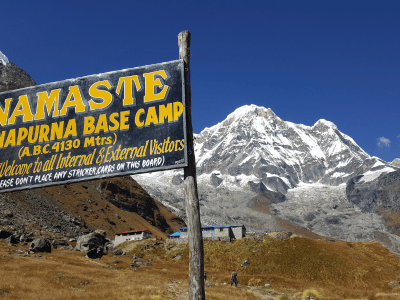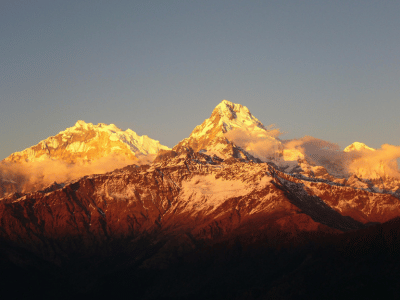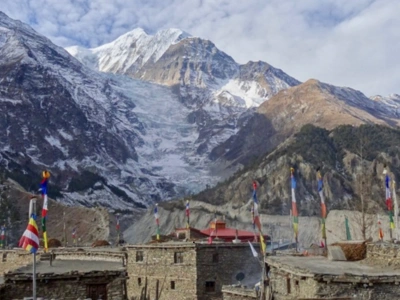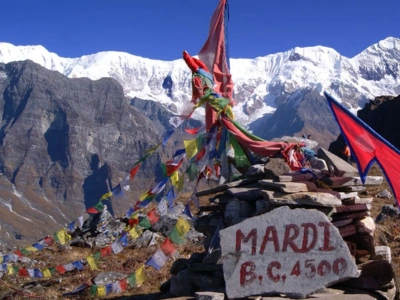

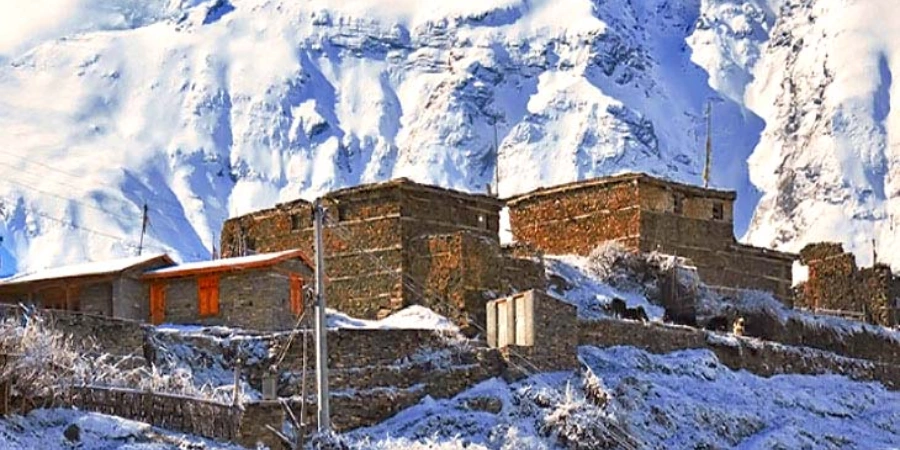
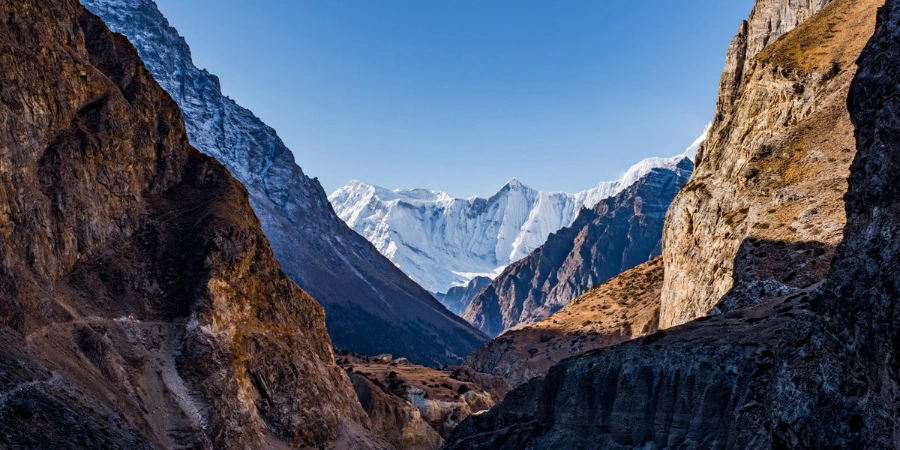


Overview of the Nar Phu Valley trek: 19 days.
Looking for a scenic, off-the-beaten-path trek in Nepal filled with Himalayan wilderness and Tibetan culture? The Nar Phu Valley Trek is a 19-day adventure that starts in Kathmandu and takes you through the hidden valleys of Nar and Phu in the remote northern Manang district. This moderately challenging trek combines a restricted side trail within the Annapurna Conservation Area with a portion of the Annapurna Circuit, offering a rare mix of rocky landscapes and ancient culture. The actual trekking begins in Koto, ascends through Meta and the remote highlands, crosses the stunning Kang La Pass (5,320m), and ends in Muktinath after traversing the legendary Thorong La Pass (5,416m).
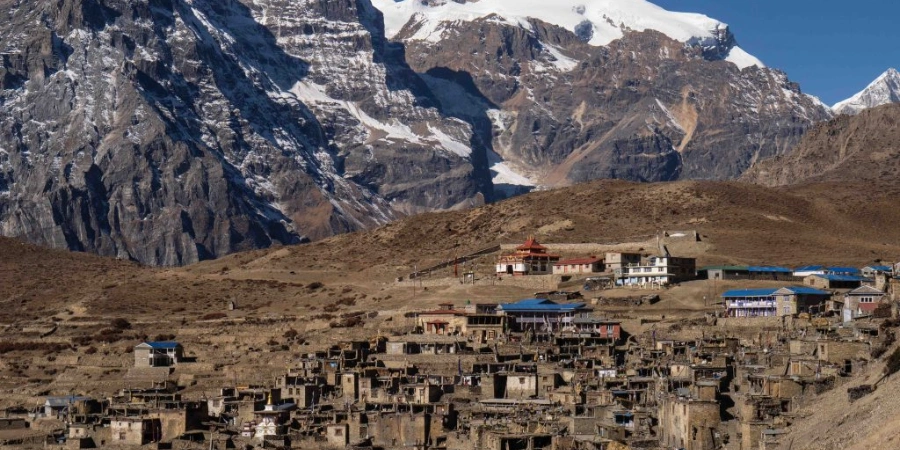
This trek offers you the chance to immerse yourself in the culture and celebrations of two traditional Tibetan villages—Nar and Phu. Nar is slightly larger and more accessible, with farmland and traditional houses, whereas Phu is more isolated and older. When you visit the village, you feel like you've arrived somewhere entirely new. Who wouldn’t be happy? When else can someone stay, speak, and celebrate festivals with the locals while enjoying delicious local food?
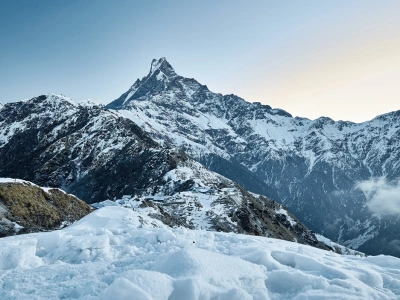
When you are on the Nar Phu Valley Trek, you feel like you are stepping into a forgotten himalayan world. As you leave the popular Annapurna Circuit at Koto (2,600m), the landscape and atmosphere instantly change. You may be trekking for the first time in your life across wind-eroded, barren land, surrounded by dramatic sandstone cliffs. The routes from Koto to Meta and Meta to Phu are even more amazing due to their landscapes. You can see Himlung Himal (7,126m), Kangaru Himal (6,981m), and Pokharkan (6,340m) from the trail. Have you ever been in a place surrounded by hills? If not, then when you reach the area around Phu, you will find yourself encircled by layers of terraced hills, dry riverbeds, and distant glacier ranges. When you trek from Nar to Ngawal via Kang La Pass (5,322m) (big cross), you can see Annapurna II, IV, Tilicho Peak, Gangapurna, and Pisang Peak. You may feel as if the wind is trying to carry you away. There are ice-covered hills, and the cold can strike you sharply.
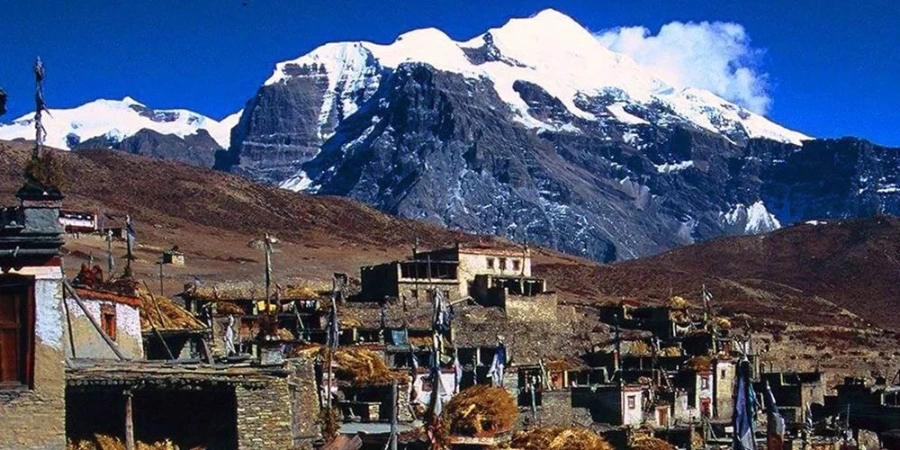
This trek is culturally rich. Do you know that the main inhabitants of the Nar and Phu villages are ethnic Tibetans? they are called Phu-tibetan people or Manangis. Their language, dress, religion, and architecture are all Tibetan in origin. They speak a Tibetan dialect and Nepali. If you wish to see tibetan buddhism without reaching tibet, then don't worry; Nar and Phu are enough. You can play with Chortens (Buddhist shrines), circle the Mani walls (stone walls with carved prayer inscriptions), and capture photos with Prayer flags (fluttering across mountain passes).
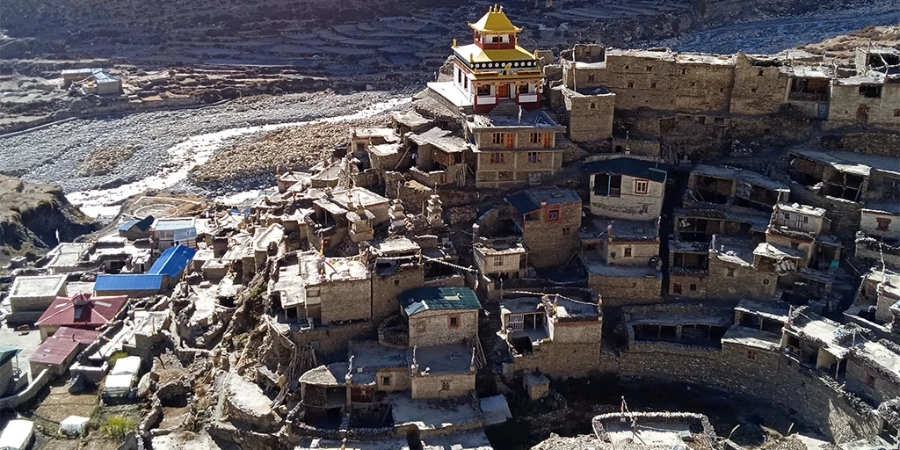
You know joy is with those who get to celebrate Losar (Tibetan New Year), the Yartung Festival (less frequent but observed in the wider Manang region), and the Lhosar Lama Dance Festival (Chyopa). You can enjoy Khapse (deep-fried pastries), yak milk products, and Chhaang (fermented barley beer) during the festivals. Don’t miss the ancient monastic culture at Tashi Lhakhang Gompa in Phu and Samdu Choling Monastery in Nar. Who could forget their regular food items like Tsampa, yak meat, Tingmo, Thukpa, and Momos?
The main highlight of this trek is the Nar Phu Valley, but you will also reach Thorong La Pass (the world’s highest trekking pass), as well as Manang, Muktinath, and Jomsom.
Do you want to book the trek with us? please join in our whatsapp.
Highlights of the Nar Phu Valley trek
The Nar Phu Valley Trek is not just a trek; it is a journey into nepal’s cultural village, scenic trail and the Himalayan landscape. This trek takes you off the beaten path into the restricted Nar and Phu valleys, then reconnects with the iconic Annapurna Circuit to cross the legendary Thorong La Pass. The Major highlight of the treks are discussed below.
- Explore the Hidden Tibetan Villages of Nar and Phu
The main highlight of this trek is to explore the hidden gems of Nar and Phu, traditional tibetan Buddhist villages. Nar is slightly larger and more agriculturally active, with stone houses and terraced fields. You can experience authentic Tibetan traditions, dialects, festivals, and monastic life—a living culture preserved for generations. - Immerse Yourself in Unique Culture and Festivals
You can celebrate local festivals like Losar (Tibetan New Year) and the Lhosar Lama Dance Festival (Chyopa). You can see traditional Cham dances, colorful prayer flags, chortens, and Mani walls. These moments are unforgettable. You can taste authentic foods like Tsampa, Thukpa, Yak meat, Khapse, and Chhaang (fermented barley beer). Each dish carries the flavor of tradition and uniqueness. You can also visit the sacred Tashi Lhakhang Gompa in Phu and the Samdu Choling Monastery in Nar. - Trek through an adventurous terrain
You know? When we leave the Annapurna Circuit path at Koto, we enter a dramatic landscape of wind-eroded gorges, sandstone cliffs, and glacial valleys. You will walk through isolated highland terrain like Meta and Kyang. You can see Himlung Himal (7,126 m), Kangaru Himal (6,981 m), and Pokharkan (6,340 m). - Cross the Challenging and Scenic Kang La Pass (5,320m)
The high Kang La Pass connects Nar village to Ngawal on the Annapurna Circuit. From the top of this pass, you can see Annapurna II, IV, Tilicho Peak, Pisang Peak, and Gangapurna. - Manang, Thorong La & Muktinath
Manang (3,540m) is known for its monastery, bakeries, and glacier views. It is popular to acclimatize and relax and stay in town. You will cross the Thorong La Pass (5,416m), the world’s highest trekking pass, with a pleasing panoramic Himalayan view. You also get a chance to visit the sacred temple Muktinath (3,800 m), which is a revered pilgrimage site for both hindus and Buddhists that has 108 water spouts and an eternal flame.
Route Overview of the Nar Phu Valley trek
Your journey begins in Kathmandu, where you take a sightseeing tour. The next day, early in the morning, we drive to Jagat from Gongabu Bus Park in Kathmandu.
As you start the drive to Jagat (via Besisahar), your mind begins to imagine the journey; you may think in your heart, “What will this journey be like?” You will pass through the Trishuli and Marsyangdi Rivers. The wind through the vehicle windows refreshes your memories, with Nepali folk songs playing in the background and people around you. The road itself winds through lush hills, terraced farmland, waterfalls, and rural Nepali villages. You will finally reach the Jagat after 8-10 hours of driving (approximately 200 km).
Now our actual trek begins from Jagat. The Nar Phu Valley trek trail follows the Marsyangdi River, crossing several suspension bridges and small waterfalls. You can capture photos as well as make reels for your instagram. We Trek through Chamje, Tal, and Karteme before reaching Dharpani. In Dharapani, our permits are checked, and we also stay overnight.
The actual valley trek of Nepal starts from Koto. Koto is the official entry point to the restricted Nar Phu Valley region, which separates the Annapurna Circuit trail from the Nar Phu Valley trail. Your special permits (Restricted Area Permit + ACAP) are checked here. In Koto, we eat our meal and stay overnight.
When you start the Nar Phu Valley trek by crossing the Soti Khola River just outside Koto via a wooden bridge, Your heart might whisper, 'I'm going on an entirely new trail. In no time, you enter a narrow, deep gorge that runs along the Nar Khola (river). Guess what? The path is wooded and shaded, passing through dense pine and fir forests. You may feel some pain in your knees due to frequent up-and-down sections and several landslide-prone areas. At Dharmashala, we take breakfast and rest. The trail from Dharmashala to Meta is rocky and barren with increased sun and wind exposure but enjoyable
Phu Gaun (Phu Village) lies in a bowl-shaped highland plateau, surrounded by layers of cliffs and snow peaks. After crossing a long suspension bridge, you’ll see the iconic chortens and mani walls that mark the entrance to Phu village. You can see Himlung Himal (7,126m), Kangaru Himal and Pokharkan.
"After spending a few days in the Nar and Phu villages, our journey continues from Nar to Kang La Pass and then to Ngwal. From here, the route joins the Annapurna Circuit trail. We pass through Manang, Yak Kharka, Thorong Phedi, and cross the Thorong La Pass to reach Muktinath. After Muktinath, we either drive or trek to Jomsom, from where we take a flight to Pokhara.
Table: Route details of Nar Phu Valley Trek 19 days
Nar Phu Valley trek Cost—Full Breakdown
The Nar Phu Valley Trek (19 Days) is a once-in-a-lifetime journey into one of Nepal’s most remote and culturally rich regions. Because of its restricted area status and high-altitude location, this trek involves slightly higher costs than regular Annapurna or Everest routes.
Below is a full cost breakdown to help you plan your adventure with confidence.
Destination Unlimited Treks offers Nar Phu Valley treks at affordable prices, including the cost of food and accommodation, transportation, and permits. You can contact us on WhatsApp today and join us for the Nar Phu Valley Trek.
Difficulty and Physical Fitness Required for Nar Phu Valley trek
The Nar Phu Valley Trek is a moderate to challenging adventure, best for trekkers who are reasonably fit and ready for a remote Himalayan experience. You don't need to be a professional hiker, but previous trekking experience will be an advantage. It’s worth noting that each day our trek involves long walking days, steep climbs, and high-altitude terrain.
You have to trek 6 to 8 hours a day, often on rocky (from Koto onward) and uneven trails. The highest point is Kang La Pass (5,320 meters) with very thin air, so acclimatization is very important to avoid altitude sickness.
You are trekking to a very remote, traditional tibetan buddhism village, which means there are very limited facilities. Weather around the valley is also unstable and unpredictable. We recommend having good stamina and mental readiness.
If you're wondering how to prepare:
- Do some cardio training like jogging, swimming, or cycling
- Practice uphill walks and leg workouts
- Try a few day hikes before your trip
With some preparation and a positive mindset, the Nar Phu trek is achievable for most active travelers. And the reward? Incredible mountain views, Tibetan-style villages, and a feeling of truly going off the beaten path.
Permits and checkpoints during Nar Phu Valley trek
The Nar Phu valley is a restricted and remote region of Nepal. You will need three special permits: the Nar Phu Restricted Area Permit (RAP), the Annapurna Conservation Area Permit (ACAP), and the Trekkers’ Information Management System (TIMS) Card. these permits are checked at various official checkpoints along the trail. These permits are essential not only for legal access but also to support conservation and ensure your safety.
Here’s what you need to know:
Required Permits
Nar Phu Restricted Area Permit (RAP)
- Cost: USD 100 per person for 7 days (Sept–Nov), USD 75 for 7 days (Dec–Aug)
- Issued by: Nepal Immigration Office (via registered trekking agency only)
- Valid for: Entry into Nar and Phu villages, both considered restricted zones
Annapurna Conservation Area Permit (ACAP)
- Cost: NPR 3,000 per person (~USD 23)
- Required for: Trekking within the Annapurna region, including Koto and Dharapani
Trekkers’ Information Management System (TIMS) Card
- Cost: NPR 2,000 (~USD 15)
- Purpose: Helps authorities track trekkers for safety and rescue if needed
Note: All permits must be arranged through a government-registered trekking agency, as independent trekking is not allowed in restricted areas like Nar Phu.
Major Checkpoints on the Trail
Nar Phu Valley Trek in Different Seasons—Month-by-Month Guide
The Nar Phu Valley Trek is one of Nepal’s most remote and culturally unique treks, taking you through hidden Tibetan villages, dramatic cliffs, and high mountain passes. But since this region lies in the rain shadow of the Annapurna Range and reaches elevations over 5,000 meters, the season you choose can significantly impact your overall experience.
Each season has a unique advantage. Understanding what the weather and trail conditions are like month by month can help you decide the best time to trek Nar Phu Valley based on your interests, experience level, and tolerance for weather extremes.
Whether you're looking for peaceful trails and snow, lush greenery, or bright skies and safe paths, this guide will help you choose the perfect trekking window for your adventure.
Spring (March to May)—Best for Scenic Beauty and Comfort
- Weather: Mild, with warm days and cool nights
- Trail Conditions: Dry and stable; clear paths
- What You’ll See: Blooming rhododendrons, yak pastures, and panoramic views
- Why Trek Now: Ideal balance of good weather and fewer crowds than autumn
- Recommended For: First-timers, photographers, nature lovers
Summer/Monsoon (June to August)—Lush but Wet
- Weather: Warm and humid, with frequent rainfall in lower regions
- Trail Conditions: Slippery and muddy; risk of landslides
- What You’ll See: Green hills, cloud-covered peaks, fewer trekkers
- Why Trek Now: Peaceful trails and unique monsoon beauty
- Recommended For: Experienced trekkers who don’t mind tough conditions
Autumn (September to November)—Peak Trekking Season
- Weather: Stable, dry, and cool
- Trail Conditions: Excellent; dry and well-marked
- What You’ll See: Majestic mountain views, clear skies, cultural festivals
- Why Trek Now: Best weather and visibility; very popular with trekkers
- Recommended For: Everyone—especially those seeking classic Himalayan views
Winter (December to February)—Quiet but Cold
- Weather: Very cold, especially at high altitudes; occasional snowfall
- Trail Conditions: Snow-covered passes (Kang La may be closed)
- What You’ll See: Peaceful villages, snow-blanketed landscapes
- Why Trek Now: Great for solitude and dramatic winter scenes
- Recommended For: Experienced trekkers with proper gear
Best Time to Trek Nar Phu Valley:
- Mid-March to May (Spring)
- Late September to early December (Autumn)
Accommodation and Food During the Trek
During the Nar Phu Valley Trek, you’ll stay in traditional teahouses and lodges that offer basic but comfortable accommodation. Rooms usually have warm beds, shared bathrooms, and stunning mountain views. Since it is a remote area, facilities may be simpler compared to more popular trekking routes, but the hospitality is always warm and welcoming.
Food along the trail is hearty and designed to keep you energized. Typical meals include dal bhat (rice with lentils), noodles, soups, and momos (dumplings). Hot tea or coffee is available almost everywhere to keep you warm after a day on the trail. Prices for meals and rooms increase slightly as you reach higher altitudes.
Accommodation and Food During the Nar Phu Valley Trek
Expect basic but cozy teahouse stays throughout the trek. Food is warm, organic, and perfect for high-altitude energy. Here's a breakdown by key stop:
Dharapani (1,860m)
- Accommodation: Local guesthouses and simple lodges
- Room Price: NPR 400–600
- Food Highlights: Dal Bhat, noodles, and vegetable soup
- Food Cost: NPR 500 – 700
Ngawal (3,530m)
- Accommodation: Traditional teahouses with basic amenities
- Room Price: NPR 600–900
- Food Highlights: Thukpa (noodle soup), momos, and dal bhat
- Food Cost: NPR 600–800
Nar Village (4,110m)
- Accommodation: Basic mountain lodges with limited facilities
- Room Price: NPR 700–1,200
- Food Highlights: Dal bhat, simple soups, and herbal tea
- Food Cost: NPR 700–900
Phu Village (4,070m)
- Accommodation: Tibetan-style teahouses in a remote setting
- Room Price: NPR 700–1,200
- Food Highlights: Tibetan bread, noodle soups, dal bhat
- Food Cost: NPR 700–900
Koto (2,670m)
- Accommodation: Small guesthouses and lodges
- Room Price: NPR 500–800
- Food Highlights: Dal bhat, noodles, and basic breakfast options
- Food Cost: NPR 600–800
Transportation Options during Nar Phu Trek
Nar Phu Valley can be reached by a combination of road travel and trekking. Destination Unlimited Treks arranges all transportation for you. The details below provide you information about transportation services during this trek.
- From Kathmandu to Besisahar:
Most trekkers begin their journey with a scenic drive or tourist bus ride from Kathmandu to Besisahar. The trip takes about 6 to 8 hours on a paved road, passing through beautiful countryside and small towns. - Besisahar to Dharapani:
From Besisahar, you’ll take a jeep or local bus to Dharapani, the main gateway to the Nar Phu trek. This drive lasts around 3 to 4 hours on mountain roads with stunning views. - Starting the Trek:
From Dharapani, the trek officially begins. You’ll hike through remote villages and high mountain trails that lead into the hidden Nar and Phu valleys. - Muktinath to Jomsom:
You will get a local jeep or need to trek depending upon the condition of the road and the season. - Flight from Jomsom to Pokhara:
In the right season, we take a flight from Jomsom to Pokhara.
Do you need help arranging your transportation or private transfers? Destination Unlimited Treks can organize everything to make your journey smooth and comfortable.
Nar Phu Valley vs Other Remote Treks in Nepal
The Nar Phu Valley Trek is a stunning trek with fewer crowds. It is a popular trek in Nepal for experiencing remote mountain Tibetan village life and breathtaking landscapes.
Compared to other remote treks like Upper Mustang, Dolpo, or Kanchenjunga, Nar Phu is more accessible while still feeling wild and untouched.
Unlike some remote treks that require special permits and longer travel times, Nar Phu allows trekkers to explore high-altitude deserts, ancient monasteries, and rugged trails within a manageable 19-day itinerary. The trek also combines natural beauty with rich cultural experiences, making it perfect for adventurers seeking solitude without sacrificing comfort.
If you want a truly off-the-beaten-path trek with spectacular mountain views and authentic local culture, Nar Phu Valley is an excellent choice among Nepal’s remote treks.
Trip Essentials And Trip Information
- Visa:
Most travelers need a visa to enter Nepal, except Indian citizens. You can get your Nepal visa at your Nepalese embassy or consulate abroad. Nepal needs your password with at least six months of validation. You have to pay USD 50 for a 30 days travel visa. - Currency Exchange:
Nepal accepts Nepali Rupees (NPR) only. You can exchange your money safely at banks or authorized exchange centers in Kathmandu and pokhara or along your route. The general exchange rate between NPR and USD is 1 USD for 135 NPR. Destination Unlimited Treks will also provide this service. - Travel Insurance:
Don’t skip travel insurance for this trek. You must have this. Make sure your plan includes medical emergencies and helicopter rescue for altitudes up to 5,500 meters. Prices typically range from $30 to $150 USD, depending on how long you’re covered and what’s included. - Personal Expenses:
We recommend you bring some cash. This cash is necessary for your personal expenses, including expenses on snacks, drink and tipping for the guide and porter. The fact is that the little extras are not covered in your packages.
How To Book This Trek
Booking your Nar Phu Valley Trek with Destination Unlimited Treks is simple and stress-free. You can reserve your spot directly through our website using a secure payment system with Visa or MasterCard.
Not comfortable booking online? No problem—we also accept direct bank transfers. Just reach out, and we’ll share the bank details with you.
To confirm your trek, we only need a 20% advance payment. The remaining amount can be paid when you arrive in Nepal. After we receive your deposit, we’ll send you a confirmation email with your detailed itinerary, permit information, and official invoice.
We recommend booking early so we can handle everything for you—permits, lodges, guides, and transportation—especially during the busy trekking seasons.
Got questions? We’re here for you anytime! Our friendly team will support you every step of the way to make sure your trek is safe, smooth, and unforgettable.