
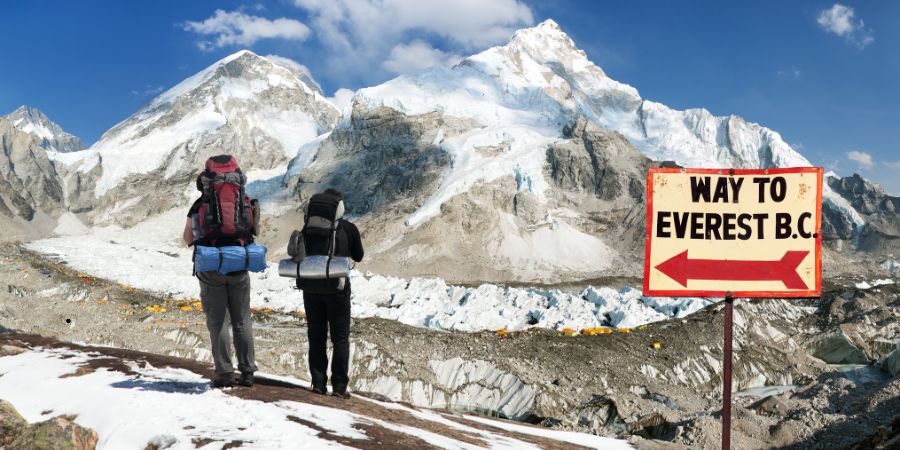


Everest Base Camp via Kalapathar Trek Overview
Everest Base Camp via Kalapathar Trek – 12 Days is a short Khumbu region trek. This trek is suitable for those who want to explore khumbu region with limited time. This trek takes you to the base camp of the world’s highest mountain, Mt. Everest, in the Khumbu region area, and Kala Patthar, which is a great place for enjoying a sunrise and sunset. This trek is shorter and is more full of adventure than other Khumbu region treks. Besides trekking along the Himalayan region in a shorter period of time, you will experience a Sherpa Culture along. Would you like to do such a trek with us? Destination Unlimited Trek can offer you this fabulous trek at an inexpensive price, along with an experienced guide.
Many people want to reach Everest base camp. They want to share with the world that they have reached the base camp of the world's highest peak, Mount Everest. This desire is shared by all those who are interested in adventure. This trek is so full of diversity that every step is a new experience. After starting the journey from Lukla towards Phakding along the banks of the Dudh Koshi, the real trek begins. We depart towards Namche Bazaar via many suspension bridges, including the Hillary Bridge decorated with prayer flags. The trails navigates through rhododendron and pine forests. The journey sometimes climbs uphill and sometimes descends like the Dudh Koshi River. The journey moves through the valleys. Sometimes the sound of birdsong is heard during the trek and sometimes the animals of the Himalayas are found. You see Buddhist monasteries and sometimes ancient Sherpa settlements. In general, this journey is special for everyone and will be unforgettable.
This Himalayan trek is mainly for seeing the mountains. When you reach Namche Bazaar, the mountains start to appear. A thrill starts to grow in you. Imagine how it feels if you are seeing the mountains up close for the first time. At first glance, you can see mountains like Everest, Lhotse, Nuptse, Ama Dablam, Thamserku, Kongde Ri. When the weather is clear, these mountains are more visible. This makes the journey more exciting. However, the experience of seeing the mountains from Dingboche, Tengboche, Lobuche and Gorak Shep cannot be described in words.
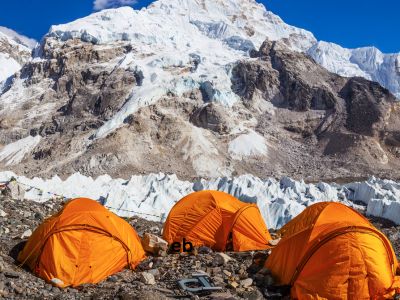
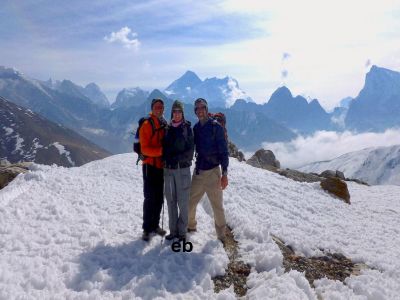
On this journey, you have to travel through snow-covered paths. Traveling on snow, that too on steep paths, is not easy. Perhaps this is your first experience. Did you know? As the altitude increases, you will realize that its getting difficult to breathe.The reason for this is that the amount of oxygen decreases with altitude. Cold air also blows in the high Himalayan region. The face and skin start to dry out. This is the mountain, so the weather keeps changing. When the weather is not clear, you cannot see very far. But all the experiences make your journey more adventurous. When you reach the last point of the trek, Kala Patthar, you will see a panoramic view of Everest (from base to summit), Nuptse, Lhotse, Pumori, Changtse and countless other peaks in all directions. Kala Patthar means black stone. Is there a place like the name? What do you think? The place here is generally a bit rugged. It is a bit rocky. Imagine, when you reach the Everest Base Camp, you will feel like you are standing at the foot of a huge mountain. You will feel like you are at the base surrounded by the icefalls of the Khumbu Glacier and the massive walls of Nuptse, Pumori and Lingtren. You can capture this moment on camera. This experience is even more elevated when you do it with your best friends.
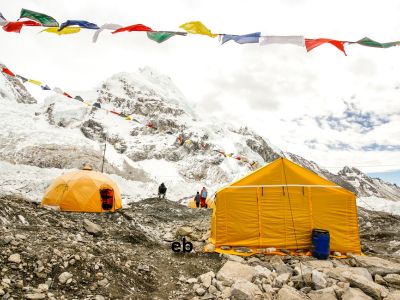
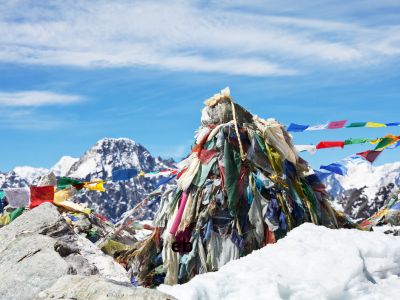
This trek is also culturally rich. You will visit various Sherpa settlements located in the Khumbu region. The Sherpa caste is mostly associated with Buddhism. You will see many monasteries around every village. Prayers are held in the monasteries in the evening. The prayers of the monks echo to the surrounding mountains. Prayer flags cover the entire monastery and settlement. You can see the Mani Wall. Generally speaking, you will see the entire lifestyle of the Sherpa community. You can also celebrate the festivals celebrated by the Sherpa community together. This trek is also special for those who want to know and understand the culture.
Everest Base Camp via Kalapathar Trek Highlights
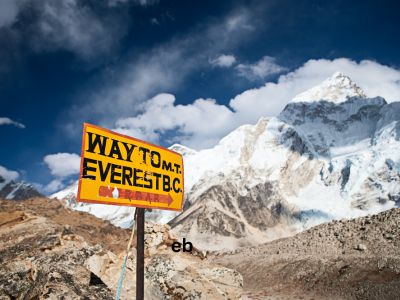
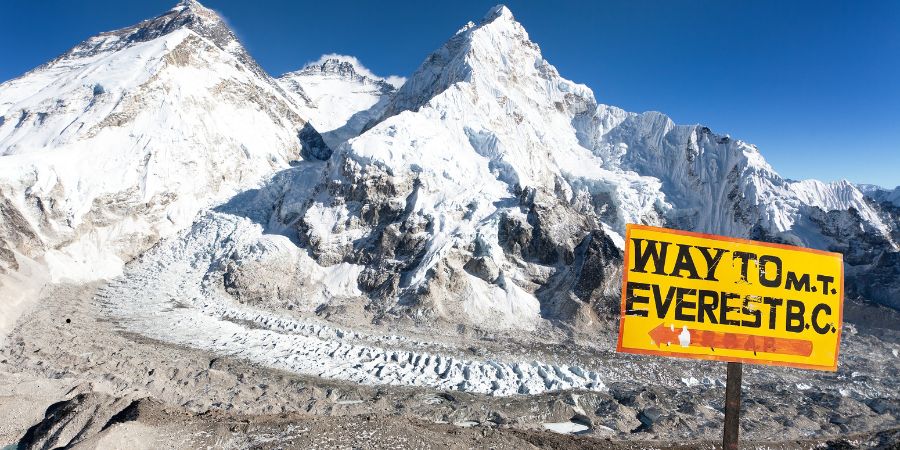
- Trek to Everest Base Camp (5,364 m): You will have the opportunity to stand proudly at the foot of the world’s highest mountain, surrounded by the Khumbu Icefall, Nuptse, Pumori and Lingtrain. This is the base camp of the world’s highest mountain, Everest. You can make history of your life here.
- Climb Kala Patthar (5,545 meters): On this trek, you will reach Kala Patthar. From here, you can experience the best panoramic views of Everest, Lhotse, Nuptse, Pumori and the Himalayan range of peaks. This experience is even more beautiful when it is sunrise or sunset.
- Climb Kala Patthar (5,545 meters): On this journey, you will reach Kala Patthar. From here, you can experience the best panoramic view of Everest, Lhotse, Nuptse, Pumori and the Himalayan range of peaks. This experience is even more beautiful when it is sunrise or sunset.
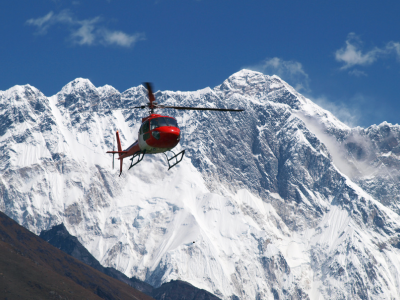
- Scenic flight to Lukla: You will experience this flight while traveling from Kathmandu to Lukla and from Lukla to Kathmandu. This is the most exciting and scenic mountain flight in the world. This flight, seeing the mountains from the sky, will be a joy in itself.
- Visit Namche Bazaar—This market, which is the gateway to Everest, is a market full of Sherpa culture. It is full of markets, bakeries, museums and magnificent mountain views. You will get a chance to see such a city.
- Tengboche Monastery: You will have the opportunity to visit Tengboche Monastery, set against the dramatic backdrop of Ama Dablam and Everest. It is the spiritual center of the Khumbu region. Here you can watch monks praying.
- Diverse Himalayan Landscapes: You will walk through lush rhododendron and pine forests. This trek will give you the feel of a jungle safari. You will cross suspension bridges over the Dudh Koshi River. You will cross glacial moraines at high altitudes.
- Sherpa Culture and Hospitality: This is the Khumbu region. Here are traditional Sherpa villages that define the cultural richness of Khumbu. Here you can see Buddhist monasteries and prayer wheels. You can see the atmosphere being spiritual. This will give you the experience of visiting a new place and culture in your life.
Route Overview of the Everest Base Camp via Kalapathar Trek
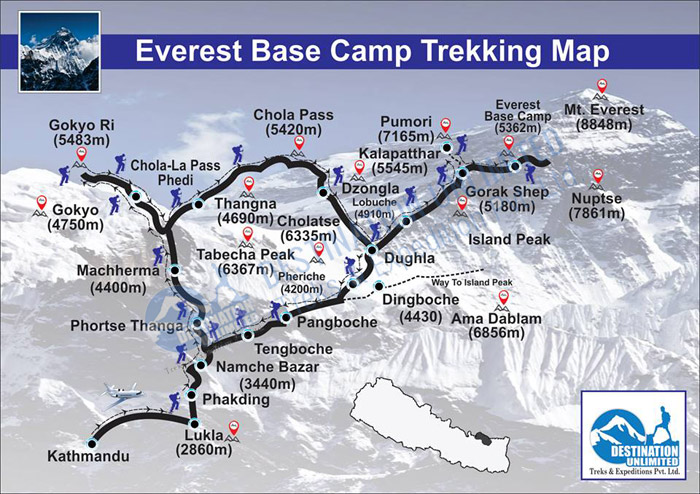
After flying from Kathmandu to Lukla, the main trek begins. In Lukla, we meet the porter, pack our bags, adjust our shoelaces and descend a little. The descent is through dense pine and rhododendron forests. After few hours hike, we reach Dudh Koshi and cross several suspension bridges over Dudh Koshi. We pass through places like Chhepalung and Ghat and reach Phakding, a small village on the riverbank. Phakding is a small Sherpa settlement. From here, the next day, we again follow the banks of the Dudh Koshi river, and after few hours of uphill climbing, we reach Monjo. Monjo is also the entry point to the Sagarmatha National Park. Do you know where your permit is checked? Yes, your permit is checked in Manjo itself. Only after climbing up from Manjo can you reach Namche Bazaar. The mountain views start from Namche Bazaar. You will see Mt. Everest (8,848m), Lhotse (8,516m), and Thamserku (6,623m). We will stay here for one night. This is the capital city of the Sherpas. Here we stay for one more day for acclimatization. We can travel to Everest View Hotel (3,880m) for acclimatization and to Khumjung village. Namche is a market in itself. You can visit the lively market of Namche and the Sherpa Cultural Museum.
The journey from Namche Bazaar to Tengboche and Dingboche is different in itself. The journey from Namche Bazaar to Tengboche starts with a view of the Dudh Koshi River. You trek while seeing Everest and Ama Dablam. You descend for a while and reach Phunki Tenga and then climb up for a short peroid of time, through rhododendron and pine forests. After a few hours walk , you will reach Tengboche. Here you will see the famous monastery of the Khumbu region, Tengboche Monastery. If you arrive in the evening, you can also see the monks praying. The journey from Tengboche to Dingboche is a bit downhill. You have to travel through the forest. You can see musk deer and Himalayan monals at special times. You will see small streams. The weather in the forest is generally cold. You will also cross the Imja Khola river and reach the old Sherpa village of Pangboche. We spend one day in Dingboche for acclimatization, and the next day we set off towards Lobuche.
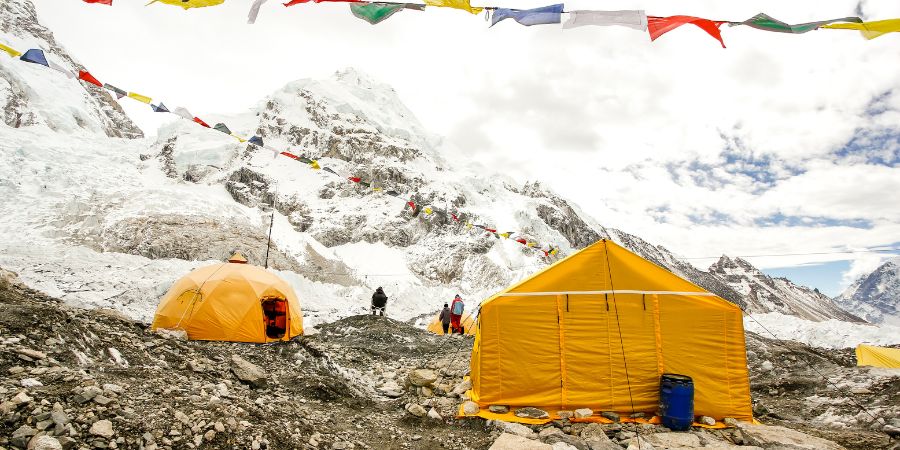
Perhaps today is a special day because we are traveling towards our destination, Everest Base Camp. Your mind may be full of excitement. Some questions may arises in your mind. Some may be tired. Do not rush; the journey should be done slowly. Our journey now goes uphill, that too through the Khumbu Glacier. The journey over the snow is somewhat adventurous. In some time, we reach Gorak Shep. This is the last settlement before reaching Everest Base Camp. The journey from Gorak Shep to Everest Base Camp is rugged; some is covered with snow, and some is through the rough glacier. When you reach Everest Base Camp, you will be surrounded by the Khumbu Icefall, Nuptse, and the towering presence of Everest on all sides. You can take photos and videos here. We spend some time here and then return to Gorak Shep. After a one-night stay, the next day we travel to Kala Patthar. This is our final destination. It is a famous place for sunrise. From here you can watch the sunrise. Also, along with the sunrise, you can see the magnificent view of Lhotse, Nuptse, Pumori, and Ama Dablam. After staying here for some time, we will return. You will return to Lukla via Feriche, Namche Bazaar and finally Kathmandu, and our journey ends.
Everest Base Camp via Kalapathar Trek—12-Day Itinerary
Everest Base Camp via Kalapathar Trek — What to Expect
This trek is not only about getting to Everest Base Camp but also about experiencing amazing mountain scenery along the way. You will walk through small Sherpa villages and Buddhist monasteries, across suspension bridges weighed down with prayer flags. As you go ‘higher,' the air gets thinner, views get bigger, and the reward in each step increases.
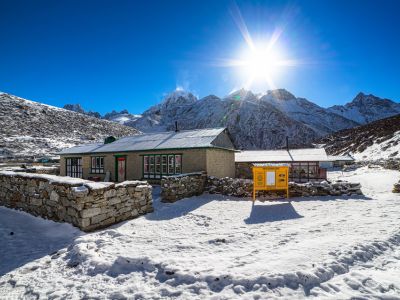
Getting to Everest Base Camp (5,364 m) is an accomplishment in itself, but the true panoramic reward is gained when we hike up Kala Patthar (5,545 m). From this vantage point we gain the best close-up views of Mount Everest as well as other epic Himalayan views of Lhotse, Nuptse, and Pumori. Harris outlines that the trek to Everest Base Camp has a good mix of moderate and some challenging days, and you will have plenty of time to acclimatize to the altitude. Nights are spent in cozy teahouses, where you can warm up with hot meals and swap stories with fellow trekkers.
Everest Base Camp via Kalapathar Trek Cost—Full Breakdown
Planning your journey to Everest Base Camp and Kala Patthar involves more than just physical preparation—budgeting plays a big part too. While the overall cost can vary depending on the type of experience you choose (luxury, standard, or budget), it's helpful to know where your money will go. Below is a detailed cost breakdown to give you a clearer idea of what to expect when budgeting for this once-in-a-lifetime trek.
Estimated Cost Breakdown for 12-Day EBC Kalapathar Trek
Difficulty Level of Everest Base Camp Kalapathar Trek
Reaching Everest Base Camp and Kala Patthar is not an easy feat, but it's definitely achievable—even if you're not an experienced trekker! The most difficult part isn't the trail or terrain, but the altitude as well as long days of walking. Most of the days spent trekking have about 5 to 7 hours of consistent walking, sometimes uphill, other times downhill, and you can usually count on thin air to make it a bit more difficult while you are walking up.
You don’t have to be in top shape or have any mountaineering experience. Plenty of people, young and old, walking with and without prior experience, trek to Everest Base Camp every year. Having a reasonable fitness level, though, does have its advantages. If you can go for a few hours, at a time, and feel comfortable with some degree of uphill, you are definitely on the right track.
Be sure to get into some kind of routine before your trip—hiking, cardio, or just go for long walks, with a bag-pack. This way you can condition your body to take long walks. The most important thing is to go at your own pace, taking it slow, and to take it slow because the higher you go, the thinner the air.
Given the right mindset, some training, and the time to acclimatize—the trek becomes a remarkable experience and no longer a daunting task.
Permits Required for the Everest Base Camp via Kalapathar Trek
Before setting off for the Everest region, you’ll need a couple of permits. These are checked along the way, so it’s best to arrange them before you start. Destination Unlimited Treks will organize them for you.
Quick Tip: Keep these permits in a safe, accessible place—you’ll need to show them at multiple checkpoints.
Everest Base Camp via Kalapathar Trek vs. Other Treks In Everest
The Everest region has lots of trekking routes and while all of them are wonderful in their own way, the Everest Base Camp Kala Patthar Trek stands out for one very big reason: the views. Most treks will take you through amazing Sherpa villages and offer opportunities to catch a glimpse of the towering peaks, but Kala Patthar is the closest and most dramatic vantage point of Mount Everest there is. The Gokyo Lakes Trek takes you to more turquoise glacial lakes and trekking over the Cho La Pass, but the route to Kala Patthar is more about seeing Everest in all its splendor, face-to-face, and as close as you can get without a technical climb.
The Three Passes Trek is the most challenging option, with longer trekking days, difficult high passes and fewer people, but it is also the most difficult every step of the way and requires the greatest amount of time and distance to travel. So, if your absolute dream is just to put your feet on the ground at Everest Base Camp and see Everest in its full glory, then Kala Patthar is the most efficient and rewarding way to do this, with the best of both worlds, as it includes all the famous landmarks, cultural interactions and great views along the way.
What is the best season to trek Everest Base Camp via Kalapathar Trek?
The Everest Base Camp Kala Patthar Trek is possible at nearly any time of the year, but the experience is altered quite dramatically depending on season. Many of the factors affecting your trek, like weather, visibility and trail conditions, will be influenced by the seasons.
Spring (March–May)
- Stable weather, often very clear skies.
- Hillsides covered in blooming rhododendrons.
- Gentle temperatures at lower elevations, comfortable trekking.
Pros: Clear mountain views, pleasant weather, lush landscapes
Cons: More trekkers on the trail
Autumn (September–November)
- Skies are crystal clear after the monsoon.
- Some of the best panoramic views of Everest.
- Sunny days but cold, crisp air, cold nights at higher altitudes.
Pros: Best visibility, stable weather, colourful mountain scenery.
Cons: A busy season, so book flights or lodges early.
Winter (December–February)
- A quiet experience on the trails.
- Nice snowy mountains.
- Very cold, especially at Kala Patthar.
Pros: More solitude on the trails, peaceful trekking experience.
Cons: Very cold temperatures and snow can block high passes.
Monsoon (June–August)
- Lush green valleys due to heavy rain.
- The quietest season for trekking.
- Trails may be slippery and muddy and can have landslides; very poor visibility.
Pros: Green landscapes, no crowds
Cons: Rain, leeches and limited views.
Travel Insurance Required for Everest Base Camp Kalapathar Trek
Before you head out on this incredible trek, it’s important to have the basics sorted—like your visa, insurance, and money. Being prepared helps you focus on enjoying the stunning mountains and rich culture without unnecessary stress. Here’s what you need to know:
Travel Visa (Nepal Entry)
Most visitors can get a visa on arrival at Tribhuvan International Airport in Kathmandu or at land borders. Your passport should be valid for at least six months with a blank page available. The process is straightforward and quick.
If you plan to stay longer, visas can be extended at the Immigration Office in Kathmandu or Pokhara.
Visa Fees (Current Rates)
- 15 Days $30
- 30 Days $50
Travel Insurance
Make sure your travel insurance covers:
- High-altitude trekking (up to 5,645m)
- Emergency helicopter rescue
- Trip cancellation and delays
- Lost baggage or theft
Altitude coverage is crucial for this trek—double-check your policy before buying.
Money Exchange & Budget Tips
The local currency is Nepalese Rupee (NPR). Exchange money in Kathmandu for better rates. ATMs are common in the city but scarce in the mountains. Carry enough cash for your trek, especially small bills for daily expenses like meals, charging devices, and tips. Expect to spend about $35–$50 per day on food and lodging.
Let me know if you want this formatted into a neat table or checklist style!
How to Book the Everest Base Camp Kalapathar Trek
Booking your Everest Base Camp Kala Patthar Trek with Destination Unlimited Treks is easy and hassle-free. Start by choosing your preferred travel dates, ideally during spring or autumn for the best weather and clear mountain views.
Next, get in touch with the friendly team at Destination Unlimited Treks. They’ll guide you through every step—from arranging permits and flights to organizing experienced guides, porters, and comfortable accommodations. Whether you want a private trip or to join a group, they have flexible options to fit your needs.
To secure your booking, a small deposit of 20% is required. You can pay safely via bank transfer, credit card, or other convenient methods. The remaining balance is payable once you arrive in Kathmandu.
After booking, you’ll receive all the important information—your detailed itinerary, packing tips, permit details, and airport pickup instructions. Destination Unlimited Treks is committed to making your trek smooth, safe, and unforgettable from start to finish.